
Where Heaven Touched Earth
Pilgrimage to France
From the healing waters of Lourdes to the Crown of Thorns in Paris — walk the country where the supernatural left its evidence and its invitation.
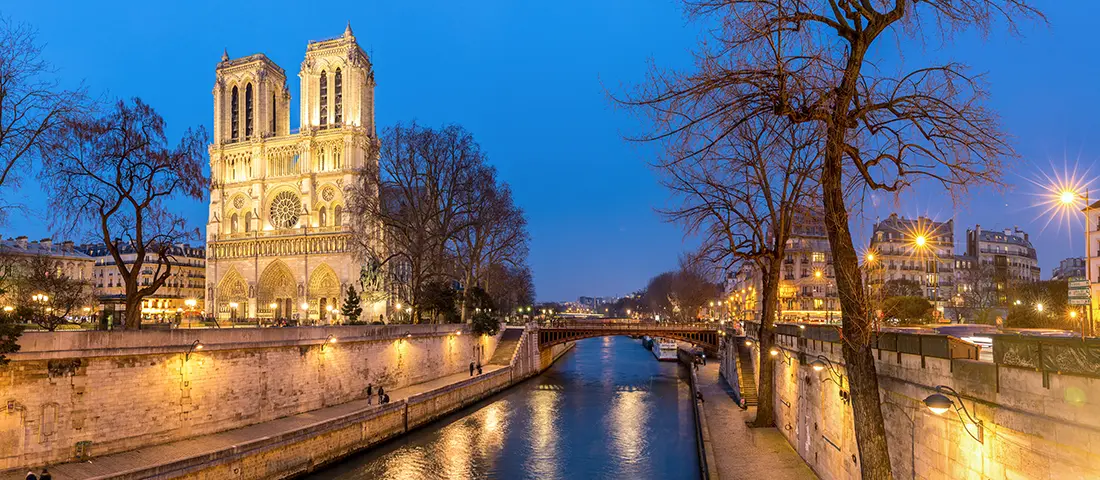
Notre Dame | Paris, France
30+ Years Guiding Catholic Pilgrims
Daily Mass at Sacred Sites
Catholic/Christian Guides
Catholic Heritage Across France
The Invitation
A Catholic Pilgrimage to France
No country preserves more physical evidence of the supernatural than France. The Crown of Thorns is venerated in Paris. The Holy Tunic of Mary has been kept at Chartres for more than a thousand years. The healing spring of Lourdes still flows. The incorrupt bodies of Saint Bernadette and Saint Catherine Labouré can still be seen. The reliquaries of Saint Thérèse and her canonized parents rest in Lisieux. Saint Joan of Arc's footsteps can still be traced from Rouen to Orleans.
A pilgrimage to France is not a tour of the past. It is an encounter with what the past kept — what Mary said and showed, what Christ left of His Passion, what the saints' bodies still bear witness to. As the eldest daughter of the Church, France holds it all close, and welcomes the pilgrim with daily Mass, candlelight processions, and the quiet rhythm of prayer at every shrine.
A pilgrimage to France is not a tour of the past. It is an encounter with what the past kept — what Mary said and showed, what Christ left of His Passion, what the saints' bodies still bear witness to. As the eldest daughter of the Church, France holds it all close, and welcomes the pilgrim with daily Mass, candlelight processions, and the quiet rhythm of prayer at every shrine.
France still holds what others only remember.
Destination Spotlight
The Eldest Daughter of the Church
The Healing Waters
Lourdes
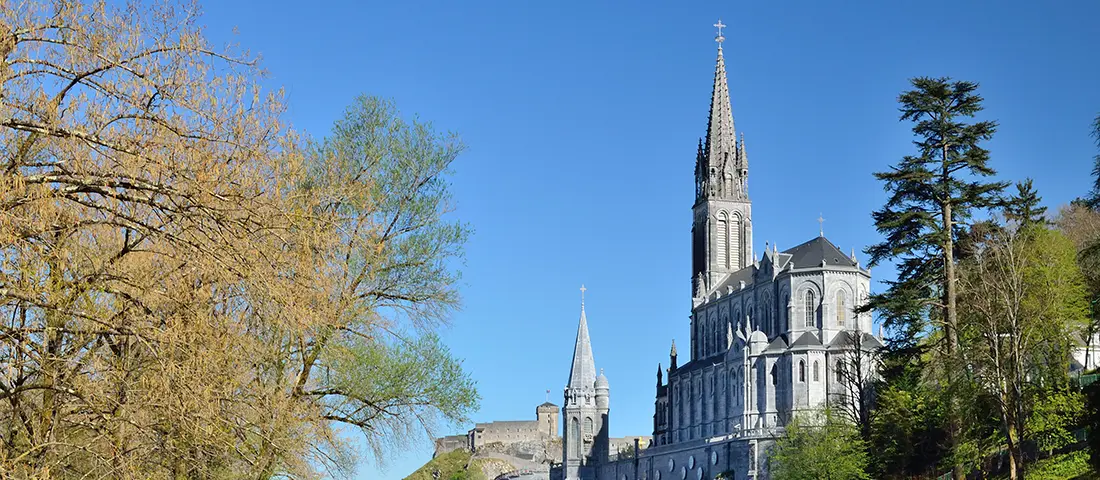
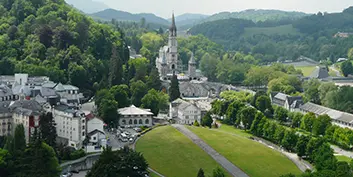
In 1858, the Virgin Mary appeared to fourteen-year-old Bernadette Soubirous in a grotto at Lourdes. Over eighteen apparitions she identified herself as the Immaculate Conception and asked Bernadette to dig in the mud for a spring — a spring still flowing today, the source of seventy miracles of healing recognized by the Church. Lourdes is the largest Catholic pilgrimage destination in France, drawing five million pilgrims a year. Tekton pilgrimages typically include two to three nights at the shrine, with daily Mass at the Grotto of Massabielle, time at the baths, and the Blessed Sacrament and candlelight processions that have continued without interruption since 1872.
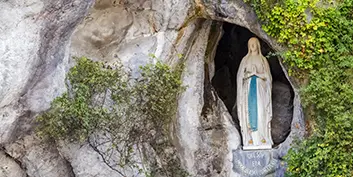
Grotto of Massabielle
The Grotto is where the Tekton pilgrim's day at Lourdes begins. Pilgrims touch the rock face polished smooth by a century of hands, drink from the spring Mary revealed, and gather for daily Mass at the niche where the eighteen apparitions took place. The Grotto Mass is the most concentrated moment of the pilgrimage — and for most Tekton groups, the spiritual center of the days at Lourdes.
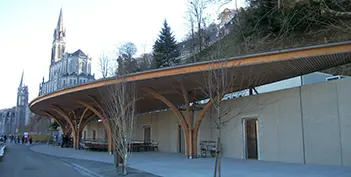
Basilica of Saint Pius X
Built underground so it would not compete with the Grotto above, the basilica's vast concrete nave holds 25,000 worshipers — a working international Mass space, not a monument. Tekton pilgrims who attend the daily international Mass at noon hear the Liturgy proclaimed in a dozen languages at once: Spanish, Italian, Polish, French, Tagalog, English. It is one of the few places in the Church where the universality of Catholicism is genuinely audible.
Image: Père Igor, CC BY-SA 3.0, via Wikimedia Commons, cropped
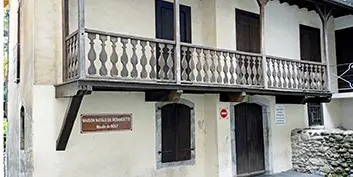
Saint Bernadette's Home
The Boly Mill, in which the Soubirous family lived after losing their own mill to debt, is a short walk from the Grotto. The single room they rented as a family of six is preserved much as it stood in 1858 — the bed, the cooking hearth, the cupboard for the family's few possessions. Standing in it is the quickest education a pilgrim can receive in the kind of life from which Mary called Bernadette out to the rock.
Image: Dennis G. Jarvis, CC BY-SA 2.0, via Wikimedia Commons, cropped
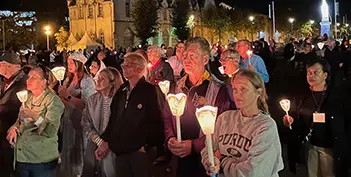
Blessed Sacrament & Candlelight Procession
At five o'clock the bell rings and the Blessed Sacrament is processed through the esplanade beneath a canopy held by four; pilgrims kneel as it passes. At nine the Candlelight Procession begins at the Grotto and winds the same path, ten thousand candles in the dark, the Lourdes hymn rising in five languages. Tekton pilgrims walk in both — and very few who do come back unchanged. This is what a Tekton pilgrimage to Lourdes actually means.
The Lourdes Baths
The spring Bernadette uncovered now feeds the baths where pilgrims have come for healing since the 1860s. Today the experience is offered as a prayerful immersion in the water, attended by volunteers and offered freely to every pilgrim. Read a pilgrim's guide to the Lourdes baths →
Image: Patrice Bon, CC0, via Wikimedia Commons, cropped
The Crown of Thorns and the Miraculous Medal
Paris
Few cities have been shaped by the Catholic faith as deeply as Paris. King Saint Louis IX built the soaring Gothic Sainte-Chapelle in 1248 to house the Crown of Thorns. Mary appeared to a novice at the Rue du Bac in 1830 and gave her the design for the Miraculous Medal, now worn by Catholics around the world. Notre-Dame Cathedral — begun in 1163 and reopened on December 8, 2024 after the 2019 fire — is once again the spiritual heart of the city. Tekton's Paris pilgrimages weave these together over three full days, with Mass at Notre-Dame or Sacré-Cœur, prayer at the Miraculous Medal Chapel, and time at every major shrine in the city.
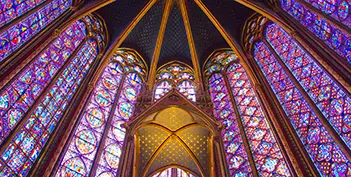
Sainte-Chapelle
The "Holy Chapel" was commissioned by King Saint Louis IX in 1248 to house the Crown of Thorns and other relics of Christ's Passion he had acquired from Constantinople. The relics were kept here for more than five centuries, until the French Revolution; the Crown of Thorns is currently preserved at the Louvre awaiting its return to Notre-Dame. Sainte-Chapelle itself remains one of the finest examples of Gothic stained glass in existence — 1,113 scenes from Scripture filling fifteen 50-foot windows.
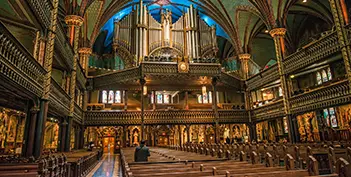
Notre-Dame Cathedral
The Gothic masterpiece on the Île de la Cité was begun in 1163 and reopened on December 8, 2024 — the feast of the Immaculate Conception — after the devastating fire of 2019. The restored cathedral is once again open for prayer, daily Mass, and pilgrim visits, with much of its 13th-century stained glass and its statue of Notre-Dame de Paris carefully preserved through the restoration.
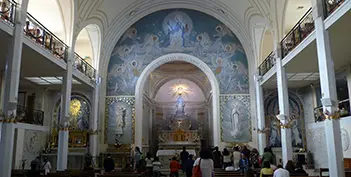
Chapel of the Miraculous Medal
Behind a quiet door at 140 Rue du Bac, in a side garden of the Daughters of Charity motherhouse, is one of the most surprising prayer spaces in Paris. Saint Catherine Labouré's incorrupt body lies in a glass reliquary near the high altar; pilgrims venerate her, take medals from the small box at the door, and sit in the same nave where she received the visions in 1830. The Miraculous Medal devotion belongs to the universal Church — but the body, the place, and the silence belong specifically to the pilgrim who comes to Paris.
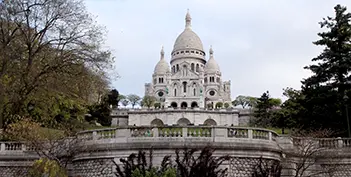
Sacré-Coeur Basilica
Above the city on the hill of Montmartre, the white-domed Basilica of the Sacred Heart has held perpetual adoration of the Blessed Sacrament — one hour for every hour of every day — since August 1, 1885. More than 140 unbroken years of someone praying before the Eucharist, all night through every night, through two world wars and a Nazi occupation. Tekton pilgrims spend time here in their own brief hour of that long Catholic vigil, on the highest point of Catholic Paris.
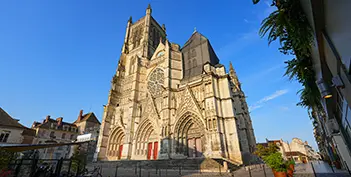
Saint-Étienne-du-Mont
This Renaissance church on the Left Bank houses the relics of Saint Geneviève, the 5th-century patron of Paris who is credited with saving the city from the army of Attila the Hun through her prayers. Tekton pilgrims venerate her relics and pause to pray with the saint who has stood watch over this city for fifteen hundred years.
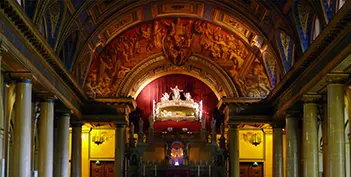
Shrine of Saint Vincent de Paul
The chapel of the Vincentian Fathers — the Congregation of the Mission, founded by Saint Vincent de Paul in 1617 — holds the saint's body in a glass reliquary above the high altar. The "apostle of charity" rests in the city where he worked among the poorest of the poor.
Image: Mbzt, CC BY-SA 3.0, via Wikimedia Commons, cropped
The Little Flower
Lisieux
Saint Thérèse of Lisieux entered the Carmelite convent here at fifteen and died at twenty-four — yet within a generation she was named a Doctor of the Church by Pope John Paul II in 1997. Her "little way" — the path of holiness through small acts of love and trust in God — has shaped Catholic spirituality for more than a hundred years. Lisieux holds her childhood home, the convent where she wrote her autobiography, the basilica built in her honor, and — in the crypt of that basilica — the reliquaries of her canonized parents, Saints Louis and Zélie Martin, the first married couple to be canonized as a couple in the history of the Church. Tekton pilgrims typically spend a full day in Lisieux, visiting all four sites and joining the Carmelites in choir prayer.
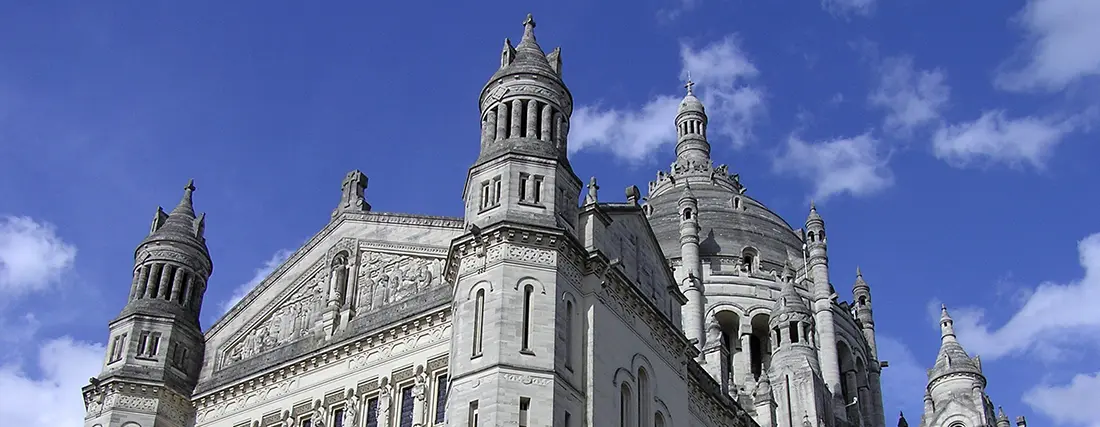
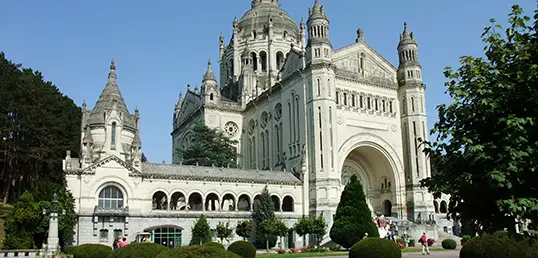
Basilica of Saint Thérèse
Constructed after Thérèse's canonization, the basilica seats 3,000 with no column blocking the view from any seat. Mosaics and stained glass illustrate her life and the "little way." In the crypt below — itself a fully decorated chapel of marble and mosaic — rest the reliquaries of her canonized parents, Saints Louis and Zélie Martin, the first married couple canonized together (2015).
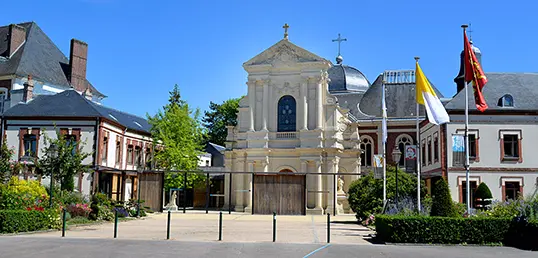
The Carmel of Lisieux
The future Saint Thérèse entered this convent in 1888 at age fifteen and died in 1897 at twenty-four. The convent chapel remains open to visitors, who can join in the daily Liturgy of the Hours prayed by the Carmelite Sisters still living in the cloister. The adjoining Chapel of the Reliquary houses Thérèse's remains for veneration.
Image: ChBougui, CC BY-SA 4.0, via Wikimedia Commons, cropped
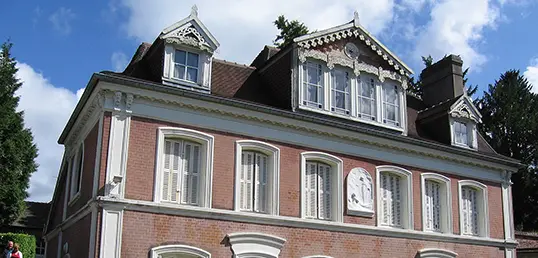
Les Buissonnets
The Martin family moved into this house in November 1877, eight weeks after Zélie's death from breast cancer. Thérèse lived here from age four to fifteen — eleven years that shaped the spirituality of the Little Way. The garden, the alcove where she prayed, and her own small room are preserved much as she left them. Pope Saint John Paul II declared Les Buissonnets a shrine in 1980, joining the Carmel and the Basilica as the three Lisieux stops every Tekton pilgrim makes.
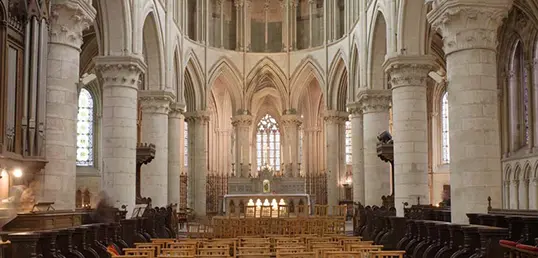
Cathedral of Saint Peter
The 13th-century Gothic cathedral where the young Thérèse Martin attended Mass with her family and received her first confession. It is also the seat of the present bishop of Bayeux-Lisieux and holds the tomb of Bishop Pierre Cauchon, the prelate who presided over the trial of Saint Joan of Arc — an unexpected thread linking Lisieux to Rouen.
Image: PMRMaeyaert, CC BY-SA 3.0, via Wikimedia Commons, cropped
The Pilgrim's Crossing
Mont-Saint-Michel
For more than a thousand years, pilgrims have crossed the tidal flats of the Normandy coast to climb the rocky island of Mont-Saint-Michel and pray at the shrine of the Archangel Michael. The Benedictine abbey, founded in 966 and now home once again to a small monastic community, rises in tiers from the medieval village at its base to the spire above. Tekton pilgrims spend a full day on the Mont, with Mass celebrated in the Romanesque Church of Saint Michael near the summit.
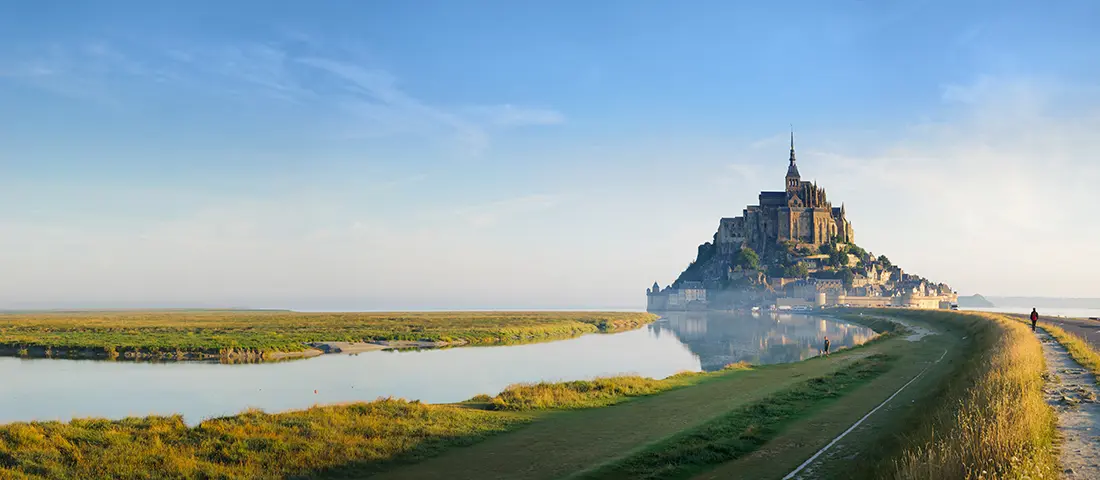
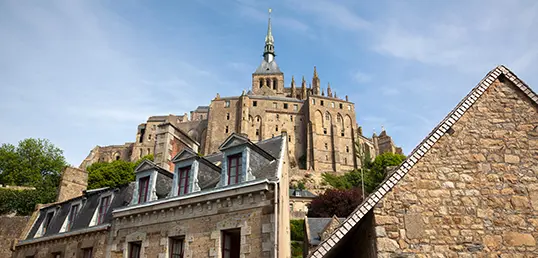
Benedictine Abbey
Founded in 966 in honor of Saint Michael the Archangel, the abbey is one of the great medieval pilgrimage destinations of Europe — a structure built upward in tiers because the island left no room to build outward. Religious life was suppressed during the Revolution and the building used as a prison; it was returned to religious use in 1922, and a Benedictine community lives and prays there today.
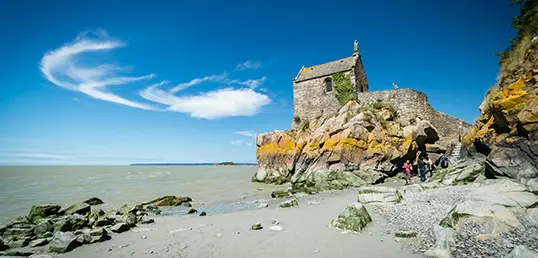
Saint Aubert's Chapel
Perched on a rocky outcropping of the island, this small stone chapel was built in the early 8th century and named for the bishop of Avranches who founded the first oratory on the Mont after — according to tradition — receiving three visions of the Archangel Michael instructing him to do so.
Image: Maëlick from Charleroi, Belgium, CC BY-SA 2.0, via Wikimedia Commons, cropped
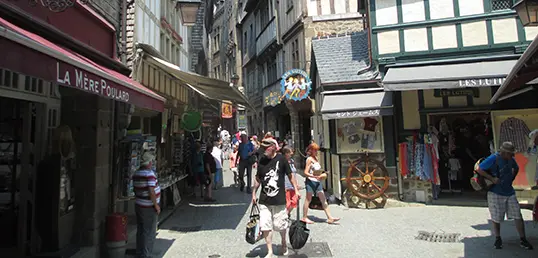
Grande Rue
The only street on the island, the Grande Rue winds from the base of the medieval village to the abbey at the summit — lined with stone houses, bakeries, creperies, and small shops that have served pilgrims for centuries. Walking it is part of the climb the abbey has always required.
Image: Avi1111 dr. avishai teicher, CC BY-SA 4.0, via Wikimedia Commons, cropped
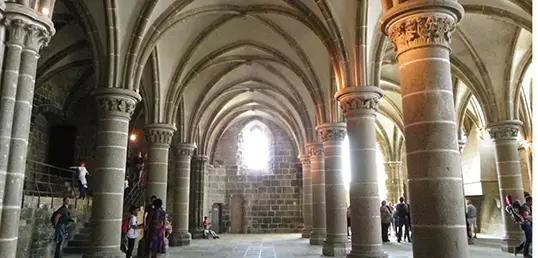
Romanesque Church of Saint Michael
The parish church of the village, in continuous use since the Middle Ages. Tekton pilgrims celebrate Mass here during the day's visit — a quiet space at the foot of the abbey, dedicated to the Archangel whose patronage gave the Mont its name.
Image: KrisMiz2018, CC BY-SA 4.0, via Wikimedia Commons, cropped
The Maid of France
The Joan of Arc Trail — Rouen and Orleans
Of all the saints whose lives are written into the soil of France, Saint Joan of Arc is unique — the seventeen-year-old peasant girl who heard the voices of Saints Michael, Catherine, and Margaret commanding her to drive the English from France. Her triumph at Orleans in 1429 turned the Hundred Years' War; her trial and martyrdom at Rouen two years later made her one of the great saints of the medieval Church. The Tekton itinerary traces her story across two cities: Orleans, where she lifted the English siege, and Rouen, where she was tried, condemned, and burned at the stake at the age of nineteen.
Church of Saint Joan of Arc (Rouen)
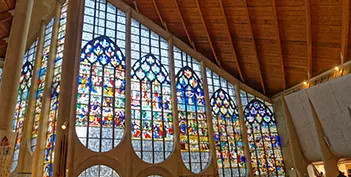
Built in 1979 on the Place du Vieux-Marché — the very square where Joan of Arc was burned at the stake on May 30, 1431 — this contemporary church is designed to suggest the flames of her martyrdom. The 16th-century stained-glass windows were salvaged from a nearby church destroyed in World War II and installed here, giving the modern building a medieval heart.
Image: Ra Boe / Wikipedia, CC BY-SA 3.0, via Wikimedia Commons, cropped
Rouen Gothic Cathedral
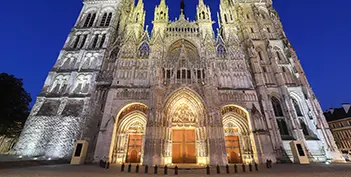
More than three centuries in the building, the Cathédrale Notre-Dame de Rouen showcases every period of Gothic architecture, including the cast-iron neo-Gothic spire — at 151 meters, the tallest church spire in France. Famous as the subject of Monet's series of light-study paintings, but more importantly as the cathedral that has stood watch over the city where Joan was tried.
Cathedral of Sainte-Croix (Orleans)
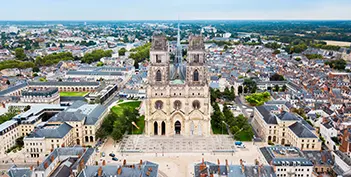
The Holy Cross Cathedral of Orleans stands at the head of the Rue Jeanne d'Arc. A church has occupied this site since the 4th century; the present Gothic cathedral was completed in 1829 — exactly 400 years after Joan broke the English siege of Orleans in 1429. Its stained-glass windows tell the story of her mission.
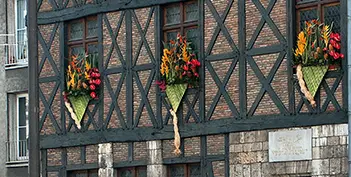
Hôtel Jacques Boucher
The half-timbered Maison de Jeanne d'Arc was the residence of the treasurer of Orleans, Jacques Boucher, who hosted Joan during the days of the siege in April and May 1429. Today the building houses a museum dedicated to her life and to the liberation of the city she led.
Image: lienyuan lee, CC BY 3.0, via Wikimedia Commons, cropped
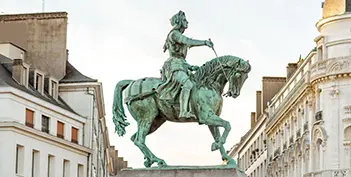
Statue at the Place du Martroi
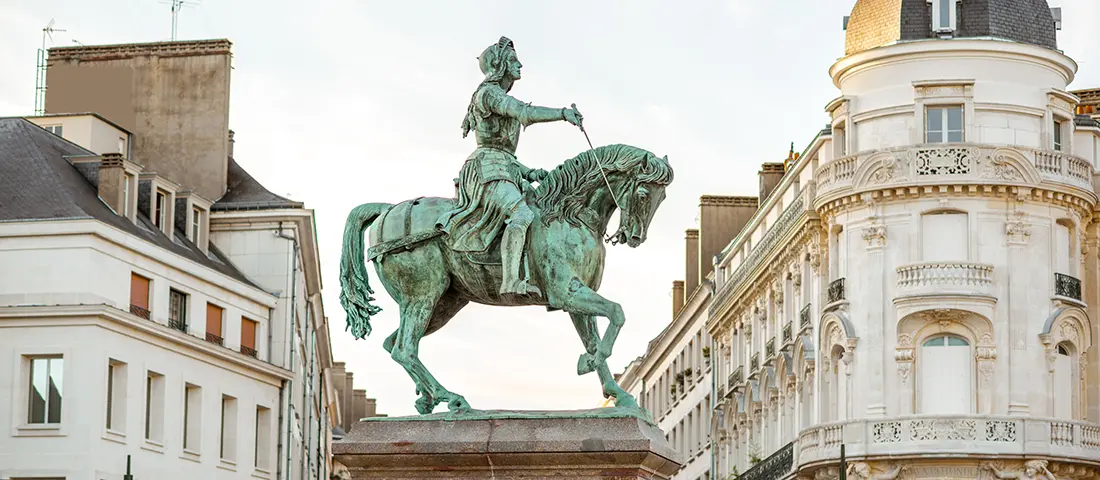
The bronze equestrian statue by Denis Foyatier, unveiled in 1855, dominates the central square of Orleans. It is the focal point of the annual Fêtes Johanniques every May 8 — the city's nearly six-hundred-year-old celebration of the day Joan ended the siege. Tekton pilgrims pause here as the practical heart of the city she saved.
Additional Destinations
More France Sites Your Pilgrimage May Include
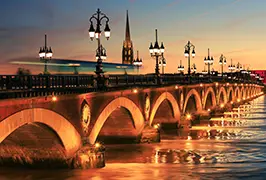
Tekton's France pilgrimages are tailored to each group's interests and length of stay. The following sites are featured on select itineraries — contact us about adding any of them to a custom pilgrimage for your group.
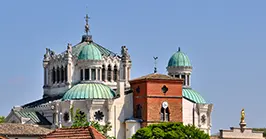
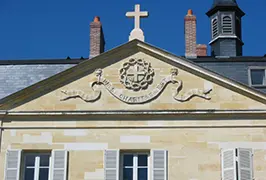
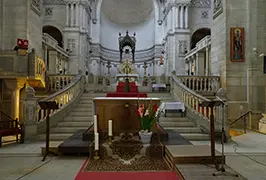
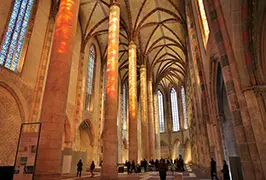
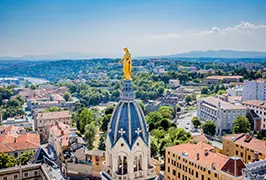
The small village of Ars in southeastern France was an unremarkable rural parish when Father John Vianney was sent there in 1818. Within a decade pilgrims were arriving from across France to receive his counsel and confession; by the time of his death in 1859, he was hearing confessions sixteen hours a day. His incorrupt body lies in a glass reliquary at the new basilica beside the old parish church where he served — a complex that includes the presbytery, the orphanage he founded, and the confessional in which he sat for forty-one years.
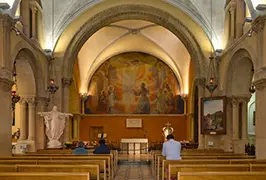
The Saints of France
Seven Saints to Walk With
A Catholic pilgrimage to France is an encounter with the saints whose places, relics, and incorrupt bodies still bear witness across the itinerary. You don't read about them in France — you stand where they stood, venerate what remains of them, and pray in the rooms they prayed in.
Saint Denis
3rd century · Patron of Paris
The first bishop sent to evangelize Roman Gaul, Denis was beheaded for the faith on the hill of Montmartre — the "Mount of the Martyrs" — and tradition holds that he carried his own head from the place of his execution to the place of his burial. The Tekton pilgrim climbs the same hill at Sacré-Cœur, at the highest point of Catholic Paris.
Saint Joan of Arc
1412 – 1431 · The Maid of France
Joan's footsteps cross the itinerary in two cities. At Orleans she lifted the English siege from her residence at the Hôtel Jacques Boucher; at Rouen she was tried, condemned, and burned at the stake in the Place du Vieux-Marché, the square where the modern Church of Saint Joan of Arc now stands.
Saint Margaret Mary Alacoque
1647 – 1690 · Sacred Heart Visionary
Between 1673 and 1675, Christ appeared four times to this young Visitation Sister at Paray-le-Monial and revealed His Sacred Heart, asking that a feast be established in its honor. Her body rests in a glass reliquary in the Chapel of the Apparitions — the very chapel where she received the visions.
Saint John Vianney
1786 – 1859 · The Curé d'Ars
For forty-one years he was the parish priest of the small village of Ars, where pilgrims came from across France to seek his counsel and confession. He heard confessions sixteen hours a day. His incorrupt body is venerated today at the Shrine of Saint John Vianney, in the church where he served his flock.
Saint Catherine Labouré
1806 – 1876 · The Miraculous Medal
Her incorrupt body lies in the chapel at 140 Rue du Bac in Paris, in the same nave where Mary appeared to her in 1830. The Tekton pilgrim venerates her body, takes a Miraculous Medal from the chapel, and prays in the place where the devotion began.
Saint Bernadette Soubirous
1844 – 1879 · Seer of Lourdes
At Lourdes she met Mary, dug for the spring, and stood at the niche where the eighteen apparitions took place. After Lourdes she spent her last thirteen years at the Convent of Saint Gildard in Nevers, where her incorrupt body remains today in a glass reliquary in the convent chapel.
Saint Thérèse of Lisieux
1873 – 1897 · Doctor of the Church
You meet her at every stop in Lisieux — at Les Buissonnets where she became Thérèse, at the Carmel where she became a saint, at the Basilica where she rests, and at the Cathedral of Saint Peter where she made her first Confession. The Little Way reaches you most directly from the rooms in which she lived it.
Pilgrim Voices
What France Pilgrims Tell Us
Walking and visiting where the saints had been and being in places where The Blessed Virgin Mary had appeared. It was a very spiritual trip. I felt very well informed about all the places we visited. The local guides were wonderful and knowledgeable.
Mary E.
France Pilgrim from Potsdam, NY
"This was our second pilgrimage with Tekton and we have experienced so many beautiful sites! Our guides have gone above and beyond! We have been blessed with our pilgrimages!"
Michael W.
France Pilgrim from Morrisonville, NY
"Mt. Saint-Michel and Lourdes are the best locations. Seeing all the beautiful stained glass in the basilicas was most beautiful. One can see these on the internet and in books but being there in person was a spiritual moment that I will never forget."
Emma P.
France Pilgrim from Leeds, AL
The Tekton Difference
Why Choose Tekton for Your France Pilgrimage
Over 30 years guiding Catholic pilgrims to France
Leading group pilgrimages to France's sacred sites since 1996.
Daily Mass at the sacred sites themselves
Mass at the Grotto of Massabielle, the Carmel of Lisieux, the Church of Saint Michael on Mont-Saint-Michel — not just at the hotel chapel.
Knowledgeable Catholic or Christian Guides
Guides who share the faith and know both the history and the spiritual depth of every site.
Properly Paced Itineraries
Time built in for the Rosary, candlelight processions, and quiet prayer — not a forced march from one site to the next.
Custom-Crafted Itineraries
Itineraries built around the needs and pace of your specific group, not a one-size-fits-all template.
Prayerful Pre-Pilgrimage Prep
Spiritual resources to ready your heart before departure — seeds of grace, not souvenirs.
Pilgrim Questions
Questions About a Catholic Pilgrimage to France
Practical questions about visiting France — visas, currency, electricity, etiquette — are answered in our France Travel Guide
How long is a Catholic pilgrimage to France?
What sites are visited on a Catholic pilgrimage to France?
Is Lourdes always included on a Tekton France pilgrimage?
When did Notre-Dame Cathedral reopen?
What is the Crown of Thorns at Sainte-Chapelle?
Where are Saints Louis and Zélie Martin buried?
What is the Sancta Camisa at Chartres?
Can women's groups travel together on a France pilgrimage?
Does a France pilgrimage include daily Mass?
Read Before You Go
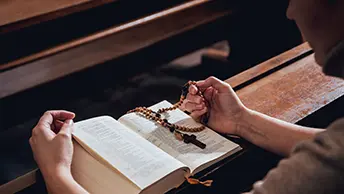
Begin the Pilgrimage
Come and See France for Yourself
From the healing waters of Lourdes to the Crown of Thorns in Paris, from the Carmel of Lisieux to the Holy Tunic at Chartres — the eldest daughter of the Church is waiting. Choose a scheduled departure above, or speak with a Pilgrimage Manager about a custom pilgrimage built around your parish, women's group, or community — a focused Lourdes pilgrimage, a Northern France itinerary with Mont-Saint-Michel and Chartres, a women's pilgrimage to Paris and Lourdes. We'll design it around you.

.JPG)
.jpg)


.jpg)


.jpg)

