


Tekton Ministries
Publish Date: April 15, 2026
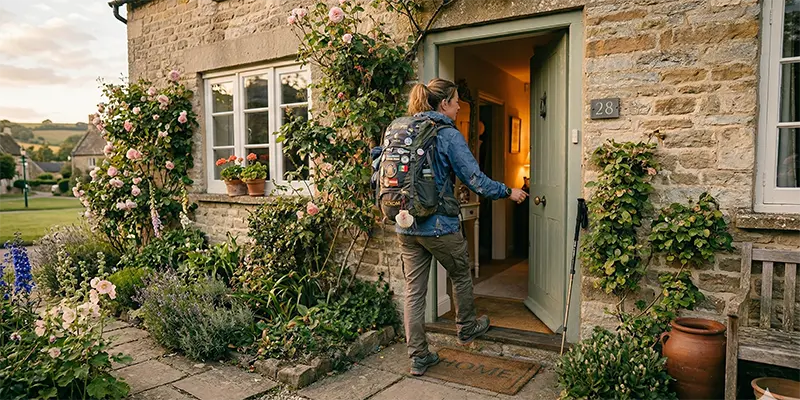
The real pilgrimage begins the moment you walk back through your own front door.
On the road to Emmaus, two disciples walked side by side with the risen Christ and did not recognize Him. It was only later—at the breaking of the bread, in the intimacy of a shared meal—that their eyes were opened. And what did they do next? They got up immediately and went back to Jerusalem. Same road. Same dust. Same miles. But they were not the same men. That is what pilgrimage does. It does not give you a new life. It gives you new eyes for the one you already have.
If you have returned from a pilgrimage recently—or if you are considering one and wondering whether it will really make a difference—this is the question that matters most: not What will I see? but Who will I be when I come home? The spiritual benefits of pilgrimage are not measured in the number of holy sites you visit. They are measured in what happens at your kitchen table on an ordinary Tuesday three months later.
The First Days Home: Holy Jet Lag
Almost every returning pilgrim describes the same thing. You step off the plane exhausted and exhilarated. The world looks the same—your neighborhood, your parish, your commute—but something inside you has shifted. Colors seem more vivid. Scripture passages that once felt familiar now carry the weight of geography: you have stood where those words happened. The Mass you attend that first Sunday home is not the same Mass it was two weeks ago. Not because the liturgy has changed, but because you have.
This is the honeymoon of re-entry, and it is real. But it is not the transformation itself. It is the first tremor of something much deeper trying to take root.
Pilgrims often struggle to explain what happened to them. Friends and family ask about the trip, and the answers come out flat: "It was amazing. You really have to go." The gap between the experience and the language available to describe it can feel enormous. This is normal. Some graces are too large for words. They have to be lived into, not summarized over dinner.
What Actually Changes: Five Spiritual Shifts Pilgrims Report
The spiritual benefits of pilgrimage are not abstract. They show up in concrete, daily ways. Not every pilgrim experiences all of these, and not all at once—but these are the most common shifts that returning pilgrims describe.
Scripture Comes Alive
Before pilgrimage, the Sea of Galilee was a name on a page. After, it is a real body of water with a specific color and a particular wind. You can hear the waves when the Gospel is read aloud. The Annunciation is no longer a theological concept; it is something that happened in a small stone room in Nazareth, in a town you walked through. The parable of the Good Samaritan takes on a different weight when you have seen the actual road from Jerusalem to Jericho—a steep, desolate descent through wilderness where ancient travelers genuinely feared for their lives. This sensory anchoring does not replace faith. It deepens it. The Word becomes flesh in a new way because you have been to the place where the Word literally became flesh.
The Mass Becomes More
Pilgrims who have celebrated Mass in the Holy Sepulchre, or in the grotto at Bethlehem, or in a small chapel overlooking the Sea of Galilee often find that their home parish Mass is transformed. Not because the setting competes with those extraordinary places, but because the pilgrim now understands viscerally that every Mass is Calvary. The altar at St. Mary's on Main Street is the same sacrifice that happened on that rocky hilltop you touched with your own hands. You no longer need to be reminded of this intellectually. You know it in your bones.
Prayer Becomes Simpler
Many pilgrims report that their prayer life changes not by becoming more elaborate, but by becoming more honest. Something about kneeling in the Garden of Gethsemane, or lighting a candle at the Lourdes grotto, or sitting in silence on Apparition Hill strips away the formulas and leaves you with the raw fact of God's presence. Pilgrims come home and find they can simply sit before the Blessed Sacrament and be. The need to fill every moment of prayer with words falls away. This is not a loss. It is an arrival.
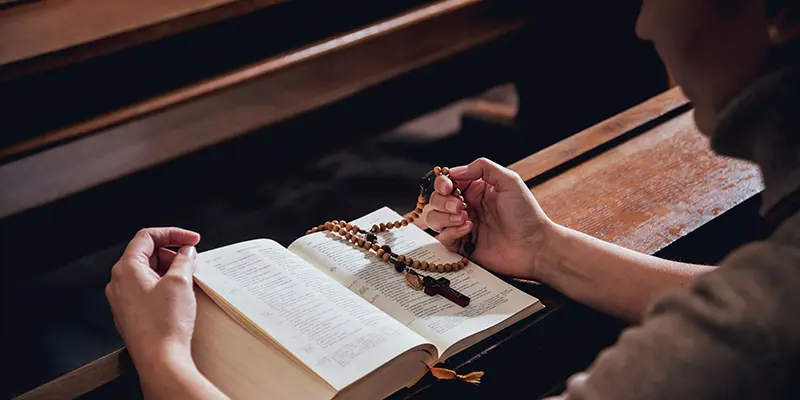
Many pilgrims find that prayer becomes simpler after returning home—less about words, more about presence.
Suffering Looks Different
One of the most unexpected ways pilgrimage changes your faith is in how you carry suffering. The pilgrim who has walked the Via Dolorosa with Christ's Passion in mind—who has touched the stone where tradition says Jesus fell, who has stood on Calvary and looked down at the chapel of Adam below—returns home with a different relationship to their own crosses. The suffering does not disappear. But it acquires a context. A direction. A meaning. This is not glib optimism. It is the fruit of having physically traced the path from agony to resurrection.
Community Deepens
The bonds formed on pilgrimage are unlike anything else in parish life. You have prayed together, wept together, laughed at the same frustrations, and shared the same stunned silences before holy things. These are not vacation friendships. They are forged in a shared encounter with Christ, and they tend to endure. Many pilgrims find that these relationships become a lifeline for sustaining the graces they received—the people who understand because they were there.
When the Feeling Fades: The Hardest Part of Coming Home
Here is the truth no one warns you about: the intensity will fade. Within weeks—sometimes days—the vividness of pilgrimage begins to soften. The daily grind reasserts itself. Email. Laundry. Deadlines. The kitchen sink does not care that you stood at Calvary last Tuesday.
This is not failure. This is where the real pilgrimage begins.
The spiritual masters have a name for this: consolation giving way to ordinary faithfulness. God often floods a soul with sensible graces during a retreat, a pilgrimage, or a conversion—not because that intensity is the normal state, but because the soul needs to know what it is fighting for. The feelings of closeness are scaffolding. They help you build the structure. But the structure itself—a life of deeper prayer, greater patience, more frequent recourse to the sacraments—has to stand on its own once the scaffolding comes down.
St. Ignatius of Loyola understood this well. He taught that times of consolation are given so that we can store up strength and wisdom for the inevitable periods of desolation. The pilgrim who expects the Holy Land high to last forever will be disappointed. The pilgrim who uses those graces to build new habits—daily prayer, Eucharistic adoration, the Rosary, more frequent Confession—will find that the transformation outlasts the feeling.
The Pilgrim's Paradox: Leaving Home to Find It
There is a paradox at the heart of every pilgrimage: you have to leave home to discover what home really is. The Catholic tradition calls this the mystery of Homo Viator—man on the way, the human person as a pilgrim journeying toward God. We are, all of us, exiles heading home. A physical pilgrimage does not create this reality. It reveals it.
And this is where pilgrimage changes your faith at the deepest level. You return from the Holy Land, from Lourdes, from Medjugorje, from the Camino—and you see your own parish with fresh eyes. That crucifix above the altar, the one you have looked at a thousand times without really seeing: you see it now. The Stations of the Cross along the nave walls: you have walked them for real. The tabernacle lamp: you know now what that presence costs and what it offers.
The Catechism teaches that pilgrimages "evoke our earthly journey toward heaven" (CCC 2691). Evoke—not replace. The holy sites do not contain God more than your parish does. But they recalibrate your ability to perceive Him in the places you had stopped noticing.
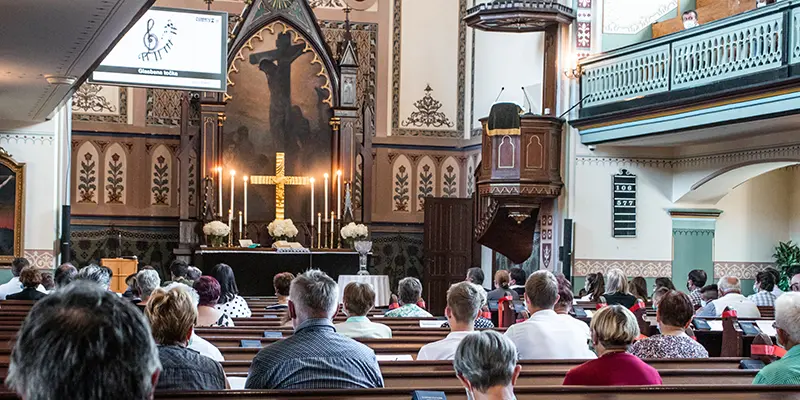
You return to the same parish. The same pew. The same tabernacle. But you are not the same person sitting in it.
Returning by a Different Way
After encountering the Christ Child, Scripture tells us the Magi "returned to their country by a different way" (Mt 2:12). That verse has become a kind of measuring stick for every pilgrimage: Did you return by a different way? Not a different flight path—a different life.
The difference between a tourist and a pilgrim is not what happens on the trip. It is what happens after. A tourist returns with photographs and stories. A pilgrim returns with wounds that have been reordered—old habits loosened, old blindnesses challenged, old prayers given new urgency. The photographs matter, too. But they serve a different purpose for the pilgrim: they are not souvenirs of where you were. They are reminders of who you are becoming.
If you have been on a pilgrimage and the graces feel like they are fading, know this: the seed is still there. Keep watering it. Stay close to the sacraments. Return to the journal you kept on pilgrimage, if you kept one. Reconnect with the people who walked those roads beside you. And if the feeling of closeness to God has dimmed, do not mistake the dimming for absence. Sometimes God withdraws the sensible consolation precisely because He trusts you to walk by faith now—the way a father lets go of the bicycle once his child has found the balance.
And if you have not yet been—if you are reading this because something in your heart is stirring, a quiet insistence that there is more—trust that stirring. It is not wanderlust. It is the voice of a God who has been waiting to show you something about Himself that you cannot learn from a book or a homily or even a lifetime of faithful Mass attendance. Some things have to be walked.
The Emmaus disciples did not plan their encounter with Christ. They were just walking home, defeated and confused. But because they were open—because they invited the stranger in—everything changed. They went back the way they came, but they were not the same people.
That is the promise of pilgrimage. Not that you will feel holy forever. But that you will know, with a certainty that nothing in ordinary life could have given you, that the God you went looking for has been at your kitchen table all along.
Ready to experience the spiritual benefits of pilgrimage for yourself? Whether the Holy Land, Lourdes, Medjugorje, or the Camino de Santiago is calling your heart, a Tekton pilgrimage is designed not just to show you the sites—but to help you return home transformed.