

Turkey Travel Guide for Catholic Pilgrims
What to Know Before Traveling to Turkey
This Turkey travel guide covers what to know before traveling to Turkey on a Catholic pilgrimage, in the order you will need it. Check your passport the week you register, because Türkiye measures validity from the day you arrive rather than the day you leave. Read the weather and dress sections a month out. Save the notes on arrival, money, and the mosques for the week you pack.
The wise men were foreigners for every mile of the journey. They crossed country that was not their own, asked directions of people who did not share their faith, and were led the whole way. Turkey asks something similar of a Catholic pilgrim. This is the ground where the Church grew up, where the letters of Revelation were read aloud and a council gave Our Lady the name Mother of God, and it is now a country where Christians are a fraction of one percent. You come as a guest. Settle the practical things in advance and you will have the attention to spare for what that is like.
Already registered? Your pilgrim packet arrives two to three weeks before departure with hotel details, your final itinerary, and guidance from your Pilgrimage Manager. This guide is what you need before that packet reaches you. For the interior preparation, read St. Luke and St. Paul, companions on the road and begin our pre-pilgrimage spiritual retreat.
Turkey Entry Requirements for U.S. Citizens
Turkey asks nothing of a U.S. pilgrim in advance beyond the right passport. The e-Visa that older articles still describe was abolished for American travelers at the end of 2023, and Americans now enter for up to ninety days without a visa of any kind. What deserves your attention instead is the validity rule, which is counted from the day you arrive, and the stamps you collect at the border.
There is no e-Visa to buy. Türkiye lifted the e-Visa requirement for ordinary U.S. passports on December 23, 2023. Sites that offer to sell you one for a fee are not the Turkish government, and there is no official portal you need to visit before this pilgrimage. Holders of official or diplomatic passports are a separate case and do still need a visa.
-
Check your passport against one date
Türkiye requires your passport to be valid for sixty days beyond the stay it grants you, and it grants ninety days, so the figure that matters is one hundred and fifty days of validity from the day you land. The U.S. State Department recommends six months, and airline check-in systems apply the more cautious number, so travel with six months to spare. If you are anywhere near either limit, renew before you register.
-
Make sure you have a blank page
Turkey stamps passports on the way in and on the way out, and it asks for at least one completely blank page to do it. A page with other stamps on it does not count. This catches experienced travelers more often than first-timers, so open your passport and look before you assume.
-
Collect your stamps, and keep them
The entry stamp is not a souvenir. Airlines in Turkey can ask to see it before they will board you on a domestic flight, which matters on an itinerary that flies from İzmir back to Istanbul for the journey home. Get an exit stamp when you leave as well, since a missing one causes trouble on a future visit. If you cross a land border and no one stamps your passport, say so before the coach pulls away.
-
If you are coming overland from Greece
Pilgrimages that begin in Athens cross into Turkey by coach in Thrace after the Mass at Philippi. Leaving Greece records your exit from the Schengen Area, and Turkish passport control follows a few minutes later with its own rules and its own stamp. Keep your passport on your person rather than in the luggage bay, and expect the crossing to take a while, because the coach cannot move until every pilgrim is through.
-
Remember that the boat to Patmos leaves the country
The day trip from Kuşadası to Patmos is a crossing into Greece and back, not a local excursion. You clear Greek entry on arrival, where the European Union's Entry and Exit System now takes fingerprints and a photograph from travelers from outside the EU, and you pass Turkish control again on the way back that evening. Carry your passport, not a photocopy, and leave the shopping bags light.
Carry copies, kept apart from the original. Photograph your passport page and email it to yourself, and keep a paper copy in a different bag. Send your Pilgrimage Manager a photograph of the page when you register, so the name on your airline ticket can be checked against it. Maiden names, middle initials, and suffixes are the usual trouble, and they are far easier to fix in Indiana than at a gate in Istanbul.
Turkey Weather Month by Month
A Turkey pilgrimage crosses three different climates in ten days. Istanbul sits between two seas and keeps a grey, wet winter that surprises people who expect the Mediterranean. The Aegean coast around Ephesus and Kuşadası is mild and dry for most of the year. Inland, the valley that holds Laodicea, Hierapolis, and Pamukkale runs hotter than both in summer and colder than both at night.
| Month | Istanbul | Kuşadası, near Ephesus | Denizli, near Pamukkale | Rain, Istanbul (in) | Rain, Kuşadası (in) | What it feels like |
|---|---|---|---|---|---|---|
| January | 49° / 39° | 57° / 43° | 51° / 37° | 2.9 | 4.6 | Cool and grey in Istanbul, milder on the Aegean, and frosty at night inland near Pamukkale. |
| February | 50° / 39° | 58° / 44° | 55° / 38° | 3.0 | 3.8 | Still wet and short on daylight. Clear spells between storms, and cold wind off the Bosphorus. |
| March | 54° / 42° | 63° / 47° | 62° / 43° | 2.4 | 2.9 | The rain eases and the coast turns green. Snow is still possible on the inland roads. |
| April | 63° / 47° | 69° / 53° | 70° / 49° | 1.9 | 1.7 | Wildflowers through Ephesus and Pergamum, warm afternoons, and cool evenings for the coach. |
| May | 72° / 56° | 77° / 60° | 81° / 58° | 1.3 | 1.1 | Warm and bright nearly everywhere, and among the best months for walking the ruins. |
| June | 80° / 64° | 85° / 68° | 90° / 65° | 1.2 | 0.2 | Summer arrives. Start early at Ephesus, and expect real heat in the Meander valley. |
| July | 85° / 69° | 89° / 72° | 96° / 71° | 0.8 | 0.0 | The hottest, driest stretch of the year, with almost no rain on the Aegean coast. |
| August | 85° / 70° | 89° / 72° | 96° / 71° | 0.9 | 0.0 | Just as hot, and busiest at the coastal sites. Shade at the ancient cities is scarce to none. |
| September | 78° / 63° | 83° / 66° | 88° / 63° | 1.7 | 0.9 | Hot early in the month and easing toward the end, with the sea still warm. Our itineraries travel now. |
| October | 69° / 56° | 75° / 59° | 76° / 54° | 3.0 | 1.7 | Warm days, cool evenings, and the first autumn rain in Istanbul. Our itineraries travel now. |
| November | 60° / 49° | 67° / 52° | 64° / 46° | 2.8 | 3.8 | Mild by day and chilly after dark, with grey skies returning over the Bosphorus. |
| December | 52° / 42° | 59° / 46° | 54° / 40° | 3.5 | 4.6 | The wettest month in both Istanbul and Kuşadası, with short days for long drives. |
- Hot and mostly dry
- Mild and changeable
- Cool and wet, with short days
- Most comfortable months for walking
Average daytime highs and overnight lows in Fahrenheit, and average monthly rainfall in inches, from the 1991–2020 climate normals published by the Turkish State Meteorological Service for the Florya station in Istanbul, Kuşadası, and Denizli. Denizli stands in for Pamukkale and Laodicea, about twelve miles away and at a similar elevation.
Istanbul is not the Aegean
The difference between the two ends of this pilgrimage is larger than most pilgrims expect. In January, Istanbul averages a daytime high of 49°F with almost three inches of rain, while Kuşadası is eight degrees warmer. In July the order reverses inland, where Denizli averages 96°F and the white terraces at Pamukkale throw the sun straight back at you. Pack for a range rather than a season, and keep one warm layer on the coach for the evening in Istanbul.
Rain follows the same split. Istanbul's wettest months are December and January, and it stays grey for weeks at a time in winter, closer to Seattle than to Athens. The Aegean coast takes its rain in the same months and then dries out almost completely from June through September, when Kuşadası records barely any at all.
The months Tekton groups travel
Our Turkey and our Turkey and Greece itineraries depart in late September and early October. That means warm afternoons at Ephesus and Pergamum, comfortable mornings in Istanbul, cooler evenings than the numbers suggest once the sun drops behind the hills, and a first chance of rain on the Bosphorus toward the end of October. Short sleeves for the sites, a light jacket for the evening, and one warmer layer you can leave on the coach will cover the whole route.
Istanbul Airport, and the Long Roads South
Tekton pilgrimages to Turkey land at Istanbul Airport on the European side of the city, and pilgrimages that begin in Greece reach Turkey by coach across the Thracian border instead. Either way the route runs south and west from there: the Dardanelles, Troy, Pergamum, İzmir, Ephesus, and the valley beyond. Knowing what each stage asks of you makes the long days lighter.
What to expect at passport control
An officer checks your passport, stamps it, and waves you through. There is no visa to present and no form to fill in. The variable is the queue, which runs thirty to forty-five minutes when several long-haul flights land together, and allowing forty-five to ninety minutes from touchdown to the arrivals hall is realistic once baggage is included. Electronic gates exist, but eligibility for foreign passports changes, so do not build your plans around finding one open to you. Your guide meets the group after customs and stays with the pilgrimage from there.
A terminal the size of a small town
Istanbul Airport is among the largest terminal buildings in the world, and the walk from passport control to the far gates can run twenty minutes. Turkish airports also screen everyone at the terminal doors before check-in, which is a second bag scan American travelers are not used to, and then again after check-in. None of it is slow on its own. It is the sum that takes the time, which is why the group leaves the hotel earlier than the flight time alone would suggest.
The first day, and the second
Flights from the United States reach Istanbul after a night in the air, and the rest of that first day is usually a short orientation and an early dinner. Stay outside in the daylight, eat lightly, and hold out until a normal Turkish bedtime. The second day is the one that asks a great deal, with the Bosphorus in the morning and the Byzantine and Ottoman city in the afternoon, and it is easier on legs that have slept. Our advice on the first day of a pilgrimage covers the rest.
The domestic flight, and going home
Most of our Turkey itineraries fly from İzmir back to Istanbul at the end, either to connect for home or to spend the last nights in the city. Domestic flights skip passport control, so they move faster, but the airline may ask to see the Turkish entry stamp in your passport before it will board you. Keep your passport in your day bag on that morning rather than in the suitcase. For the international flight home, three hours before departure is the working rule at Istanbul Airport, and two hours for a domestic leg.
Bottles of holy water from the spring at Meryem Ana, blessed oils, olive oil, and anything glass belong in checked luggage, wrapped in clothing. So does anything you bought that looks old, for the reason explained under the ancient sites.
General Information
- Capital city
- Ankara
- Largest city
- Istanbul
- Official language
- Turkish
- Alphabet
- Latin, adopted in 1928
- Time zone
- 7 hours ahead of U.S. Eastern in summer, 8 in winter
- Clock changes
- None; Turkey keeps the same time all year
- Country code
- +90
- Emergency number
- 112
Will people speak English?
In the places this pilgrimage goes, usually yes. Hotel staff, the people who work at Ephesus and the museums, and younger Turks in Istanbul and İzmir generally speak some English, and your knowledgeable Catholic and other Christian guides speak it fluently. It thins out quickly in the smaller towns along the road, at roadside stops, and among older Turks. A smile and a little patience carry further here than in most countries, and Turkish hospitality toward guests is not a tourist-board invention.
Reading the signs, and the names
Turkish uses the Latin alphabet, adopted in 1928, so road signs are readable even when the words are not. A few letters behave differently: c sounds like an English j, ç like ch, ş like sh, and the undotted ı is a softer sound than the dotted i. Kuşadası comes out as koo-SHA-da-suh, and Çanakkale as cha-NAHK-ka-leh.
The bigger adjustment is that the names in your Bible are not the names on the signs. Ephesus is Efes, Smyrna is İzmir, Pergamum is Bergama, Hierapolis sits above Pamukkale, Nicaea is İznik, and Constantinople has been Istanbul for a long time. Your itinerary uses the Scriptural names and the highway uses the Turkish ones, so it is worth reading both lists once before you fly.
A few words, and one gesture
Merhaba (mehr-ha-BA) is hello, teşekkür ederim (teh-shek-KOOR eh-deh-rim) is thank you, and lütfen is please. Evet is yes and hayır is no. You will also meet a silent version of no: the head tipped back once, eyebrows raised, sometimes with a small click of the tongue. It is not rudeness, and it is not agreement either, which is the mistake visitors make.
Emergency numbers
Turkey does not use 911. Dial 112 for police, ambulance, or fire. It works from any phone, needs no area code, and is the single number for every emergency service in the country. You will almost certainly never need it. Your Pilgrimage Manager is the first person to find if something goes wrong.
Jet lag and the clock
Turkey keeps the same time all year and does not move its clocks, so it runs seven hours ahead of U.S. Eastern in the summer and eight in the winter. On a pilgrimage that crosses from Greece by land in late October, the hour between the two countries appears partway through the week, after Greece has set its clocks back. Drink more water than feels necessary, stay out in the daylight on the first afternoon, and resist the long nap.
The Lira, Cards, and Tipping in Turkey
How much cash will I use?
Turkey uses the Turkish lira, written ₺ or TL, and Turkish law expects prices to be quoted in lira. Cards are taken in hotels, restaurants, museums, and most shops, and contactless payment is ordinary. Keep some small lira notes and coins anyway. You will want them in the Grand Bazaar and the market streets, for a glass of tea at a roadside stop, for the collection box or a candle in a church, and for the attendants at some public restrooms.
Should I buy lira before I leave?
No, and in Turkey the answer is firmer than elsewhere. Your home bank and the airport exchange counter both set their own rate and add a fee, and the lira has lost value quickly enough in recent years that currency bought weeks early is worth less by the time you land. Withdraw from a bank ATM after you arrive, or change a modest amount at one of the exchange offices, marked döviz, in the city centers. Those usually beat the airport counters by a wide margin. Change what you will actually spend rather than a round number, since converting leftover lira back at the end costs you twice.
Always choose to be charged in lira. When an ATM or a card terminal offers to bill you in U.S. dollars, it is applying its own poor rate. This is dynamic currency conversion, and declining it costs nothing. Withdraw once and withdraw enough, since most U.S. cards charge a flat fee per withdrawal on top of the exchange.
Visa, Mastercard, and the rest
We recommend Visa and Mastercard. American Express and Discover are far less widely accepted in Turkey. Before you leave:
- Tell your card issuer your travel dates for Turkey, and for Greece if your pilgrimage crosses, so your purchases are not flagged.
- Check your foreign transaction fees, so you are not surprised by extra costs.
- Carry a second card, kept somewhere other than your wallet.
- Know your PIN. Turkish terminals often ask for it.
Tipping in Turkey
Gratuities for your guides and drivers are already on your final invoice, so there is nothing to calculate or hand out on the last day. Your pilgrim packet explains what that amount covers. At a meal you pay for yourself, rounding up the bill or leaving a small amount for good service is customary, and at a tea house the coins from your change are enough.
Bargaining, without the anxiety
In the covered bazaars, a quoted price is an opening. In shops with marked prices it is not. Turkish shopkeepers are practiced and gracious, tea will be offered, and accepting it obliges you to nothing. Decide beforehand what a thing is worth to you, say so pleasantly, and be willing to walk on. Anything sold to you as antique is a different matter, and the section on the ancient sites explains why.
A Catholic Pilgrim in a Muslim Country
Almost everything the early Church settled, it settled here. Paul wrote to Ephesus and Colossae from the road, John addressed seven churches in this country by name, the creed took its shape at Nicaea, and the council at Ephesus gave Our Lady the title Mother of God. Today Christians of all kinds are well under one percent of the population, and the buildings that held those councils are mosques, museums, or ruins. Coming to terms with that before you land is part of preparing well.
The call to prayer
Five times a day, beginning before dawn, the call to prayer goes up from the minarets over loudspeakers, and in Istanbul it comes from several directions at once. The first one may wake you on your first night. It is worth hearing rather than sleeping through at least once: an entire city ordering its day around God out loud, which is not a thing most American Catholics have ever experienced. It is also the clock the sites run on, because mosques close to visitors around each prayer and for longer at midday on Friday.
Inside a mosque
Visitors are welcome in Turkey's working mosques outside prayer times, and your itinerary includes several of them. Shoes come off at the door and go into a bag you carry, so slip-on shoes and a pair of socks you do not mind being seen in make the day easier. Shoulders and knees stay covered for men and women alike, and women cover their hair. Speak quietly or not at all, do not walk in front of someone at prayer, and do not photograph people who are praying. Mosques lend scarves and wraps at the entrance, though the loan queue can be long when several groups arrive together.
Hagia Sophia is a mosque again
Justinian's Church of Holy Wisdom was the cathedral of Constantinople for nine hundred years, an imperial mosque for nearly five hundred more, a museum from 1934, and since 2020 a working mosque once more. That last change is the one that shapes your visit. The ground floor is the prayer hall, and foreign visitors now go up to the historic upper gallery instead, on a ticket that has cost €25 since January 2024 and that the Istanbul Museum Pass does not cover. Your group's entry is arranged for you. Go up slowly. The Deesis mosaic, Christ between His Mother and the Baptist, has been looking down into that room since the thirteenth century, and most pilgrims find they have nothing to say for a while.
Where you will pray
Your group celebrates Mass most days with its own priest. The places change with the itinerary and often include the outdoor altar at the House of the Virgin Mary above Selçuk, the Church of St. Polycarp in İzmir, which stands in ancient Smyrna where its bishop was martyred, the Basilica of St. John over the Apostle's grave, and a Catholic parish in Istanbul. Mass at Ephesus is not a reenactment of something that happened here. It is the same thing that happened here.
Meryem Ana, honored twice
The House of the Virgin Mary, Meryem Ana Evi, sits on the wooded hill above Ephesus where tradition holds St. John brought Our Lady. Popes Paul VI, John Paul II, and Benedict XVI have all prayed there. So do Muslim visitors, in numbers, because Mary is honored in Islam as the mother of the prophet Jesus, and there are few places on earth where the two traditions kneel in the same small stone room. Shoulders and knees covered, silence inside, and a spring outside where pilgrims fill bottles to carry home.
Visiting Ephesus and the Ancient Sites
In Turkey the places where the Apostles preached are archaeological sites, and they come with rules that surprise first-time visitors. The theater at Ephesus where the silversmiths rioted, the acropolis at Pergamum, the ruined churches of Sardis and Laodicea, and the white terraces at Pamukkale are all state property, and Turkish law protects them with unusual force.
Heat, marble, and very little shade
Ephesus is a mile of marble street under open sky. The stone has been polished by two thousand years of feet and is slippery even when dry, the ground is uneven everywhere else, and there is almost nowhere to get out of the sun. Pergamum adds a steep climb to its acropolis. Flat shoes with real grip matter more here than anywhere else on the pilgrimage, and a hat, sunglasses, and water belong in the day bag from April through October.
Pamukkale is walked barefoot
Shoes are not permitted on the travertine terraces at Pamukkale, because soles scratch and stain the calcite. Everyone goes barefoot, staff enforce it, and warm water runs across parts of the path. The surface is uneven and slippery in places, so take it slowly. Bring a bag for your shoes and something to dry your feet with afterward, and wear shoes you can slip on and off without sitting down.
Leave every stone where it lies
This is the one rule on this page with a prison sentence behind it. Turkish law treats anything old as the property of the state, the definition is broad, and airport customs takes it seriously. Travelers have been detained and prosecuted at Turkish airports for carrying home a handful of stones picked up at a beach or a ruin, on the strength of a museum expert's report that two of them were worked. Do not pocket a fragment from Ephesus. Do not climb on, sit on, or lean against the monuments. Take a photograph, and let the place stay whole for the pilgrims who come after you.
And be careful what you buy
The same law reaches into the Grand Bazaar. Buying or exporting genuine antiquities is prohibited, whether coins, tiles, icons, manuscripts, or an old carpet, and anything sold to you as antique needs a certificate from a museum and a receipt you can produce on the way out. Customs can ask. The safe course is simple: buy the new thing. A modern carpet, new ceramics from Kütahya, Turkish delight, and a fresh evil-eye bead in glass all travel home without a file number attached.
Reading Scripture where it happened
Your guides know the history. What turns a ruin into a place of prayer is usually a single passage read aloud on the spot. Mark a few in advance: Acts 19 for the theater at Ephesus, Revelation 1 through 3 for the seven churches from Ephesus to Laodicea, Acts 20 for the farewell at Miletus, Acts 16 for the vision at Troas that sent the Gospel into Europe, and the Letter to the Colossians for the mound that is all that remains of Colossae.
Phone, Data, and Water
Will my phone work in Turkey?
Yes, with one thing to check first. Turkey is not in the European Union, and a good many U.S. carrier plans and travel eSIMs that say Europe do not include it. Confirm that Türkiye is named before you rely on anything. Coverage itself is strong in Istanbul, İzmir, and along the Aegean, and thinner on the inland roads toward Pamukkale. Your options:
- Carrier travel pass. The simplest choice. Most U.S. carriers sell a daily or monthly international plan; check that Türkiye is on its country list, and add it before you leave.
- eSIM. Usually cheaper for heavy data use. Buy and install before departure, and choose one that names Türkiye. An eSIM sold for the European Union alone will not work here, so a pilgrimage that also visits Greece needs one covering both.
- Hotel Wi-Fi. Widely available, and enough if you are content to check in once a day.
Skip the local prepaid SIM. It requires your passport at the shop, and Turkey registers foreign handsets by their device number and blocks unregistered ones after about a hundred and twenty days, which is a rule no ten-day pilgrimage should have to think about.
Consider using it less. There is a stretch of marble street at Ephesus where the whole group goes quiet without being asked, and a small stone room above Selçuk where most people put the phone away without deciding to. Try the same at Pergamum and in the gallery at Hagia Sophia. Pray the place before you photograph it.
Can I drink the tap water?
Most pilgrims should not. The supply in Istanbul and İzmir is treated and chlorinated and meets the national standard, but older plumbing and the taste lead most Turkish households to drink bottled water at home, and visitors whose systems are not used to it can find it upsetting. Bottled water is inexpensive and sold on every corner, hotels and restaurants provide it, and the coach carries it. Use the tap for brushing and washing, skip ice at roadside stalls, and carry a refillable bottle you fill at the hotel before the long drives.
Food, and Fridays
Turkish food is generous and easy to like: grilled meat and fish, lentil soup, vegetables cooked slowly in olive oil, yogurt with everything, bread out of the oven, and tea at every stop. Friday abstinence takes care of itself here, since pork is rare on Turkish menus and fish and vegetable dishes are everywhere. Breakfast is a spread of cheese, olives, tomatoes, cucumber, eggs, and honey rather than anything sweet, and it will carry you to a late lunch. If you have a serious allergy or a dietary requirement, tell your Pilgrimage Manager well before departure so arrangements can be made rather than improvised.
What to Wear in Turkey and in the Mosques
Turkey is a secular republic, and in Istanbul, İzmir, and the coastal towns you will see every kind of dress there is. Unless your pilgrimage has a very specific formal occasion, you can dress much as you would at home. Two places ask for more, and both are on your itinerary.
The mosques. Shoulders and knees covered for everyone, shoes off at the door, and hair covered for women. A light scarf that lives in the day bag on Istanbul days solves it in a moment, and it is faster than the loan queue at the entrance. Men need long trousers; shorts are not admitted.
The House of the Virgin Mary. Shoulders and knees covered here as well, and quiet inside the house itself. No head covering is required, and the hill is cooler than the coast, so a light layer is welcome even in September.
Everywhere else, women do not need skirts or head coverings unless that is your preferred style, and jeans are fine, unless your priest has told you differently. In the smaller inland towns, and on the coach, most pilgrims find they are more comfortable a little more covered than they would be at home, less because anyone will say something than because it draws less attention.
Shoes matter more than anything else you bring. Ephesus is polished marble, Pergamum is a climb, Hierapolis is broken ground, and Pamukkale is walked barefoot, so pack something with grip that slips on and off easily. Our post on packing like a true pilgrim covers the rest.
Electricity, Plugs, and Adapters
- Socket types
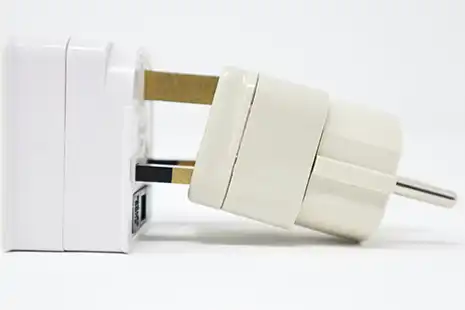
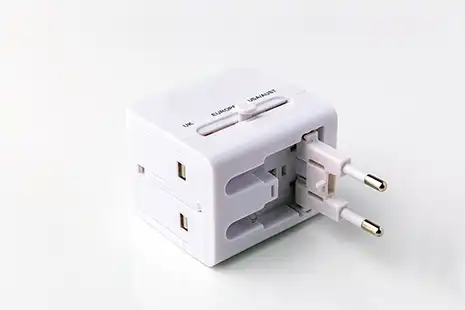
- Type C and Type F — two round pins
- Voltage
- 230V, 50 Hz
- Adapter needed?
- Yes
- Converter needed?
- Only for single-voltage devices
Adapter or converter?
An adapter lets an American plug fit a Turkish socket. A converter changes the voltage. Nearly all converters are also adapters, but not all adapters are converters, so read the product description carefully before you buy.
Check the label on each device. If it reads INPUT: 100–240V, 50/60 Hz, it is dual-voltage and can be used in any country, including Turkey, with only an adapter. That covers most phones, tablets, laptops, and electronics with a boxy charger. Most CPAP machines are dual-voltage as well, but please check with your manufacturer or doctor to make sure yours is compatible.
Single-voltage devices need a converter, or the higher voltage from Turkish sockets will burn them out. Hair dryers, straighteners, and curling irons fall into this category, as do many electric toothbrushes and shavers. Most hotels have hair dryers, and you will be able to check your specific hotels once your pilgrim packet arrives. Adapters and converters are easy to find online or in the travel section of stores such as Target and Walmart.
One adapter covers Turkey and Greece. Both countries use the same two-round-pin sockets at 230 volts, so the adapter you pack for Istanbul works in Athens too.
Questions Pilgrims Ask
Do U.S. citizens need a visa for Turkey?
No. Türkiye ended the e-Visa requirement for ordinary U.S. passports on December 23, 2023, and U.S. citizens now enter without a visa for up to 90 days in any 180-day period. There is nothing to apply for and nothing to pay, so any website offering to sell you a Turkish e-Visa is not doing you a service. What you do need is a passport that meets Türkiye's validity rule, at least one completely blank page, and an entry stamp when you arrive.
How long must my passport be valid to enter Turkey?
Türkiye requires your passport to be valid for at least 60 days beyond your permitted stay, which works out to 150 days from the day you enter on a 90-day entry. The U.S. State Department recommends six months of validity, and airlines apply the more cautious figure at check-in, so travel with six months to spare. You also need one completely blank page for the entry and exit stamps. If you are close to either limit, renew before you register.
When is the best time to visit Turkey?
April, May, September, and October are the most comfortable months for the walking a Turkey pilgrimage involves. Spring is green and mild along the Aegean, autumn is warm and dry with the sea still holding its heat, and both spare you the worst of the sun at Ephesus. July and August are very hot inland, where Denizli near Pamukkale averages a daytime high of 96°F. Winter is mild on the coast and cool and wet in Istanbul, with short days for long coach drives.
Do women need to wear a headscarf in Turkey?
Not in the street, the hotel, or the ancient sites. Turkey is a secular republic and visitors dress much as they would at home. A headscarf is required of women inside a working mosque, along with covered shoulders and knees for everyone and shoes removed at the door. That includes Hagia Sophia's prayer floor and the Blue Mosque. Mosques lend scarves and wraps at the entrance, but the loan queue can be long, so pack a light scarf in your day bag on Istanbul days.
Can Catholics celebrate Mass at the House of the Virgin Mary near Ephesus?
Yes. Meryem Ana Evi, on the hill above Selçuk, is a Catholic shrine with an outdoor altar where groups celebrate Mass, and three popes have prayed there: Paul VI in 1967, John Paul II in 1979, and Benedict XVI in 2006. Your group Mass is arranged in advance through your Pilgrimage Manager. Shoulders and knees must be covered, silence is expected inside the small stone house, and there is a spring outside where pilgrims fill bottles.
What happens at passport control at Istanbul Airport?
An officer checks your passport, stamps it, and waves you through, and for U.S. citizens there is no visa to present. The queue is the variable: waits of thirty to forty-five minutes are common when several long-haul flights land together, and forty-five to ninety minutes from touchdown to the arrivals hall is a fair allowance once baggage is included. E-gates exist but eligibility for foreign passports varies, so do not count on one. Keep your entry stamp, because you need it to board a domestic flight.
Can you drink the tap water in Turkey?
Most pilgrims should not. Tap water in Istanbul and İzmir is treated and chlorinated, but taste and older plumbing lead most Turks to drink bottled water at home, and visitors who are not used to it can find it upsetting. Bottled water is inexpensive and sold everywhere, hotels and restaurants provide it, and your coach will carry it. Use tap water for brushing and washing, skip ice at roadside stalls, and carry a refillable bottle you fill at the hotel.
What plug adapter do I need for Turkey?
Turkey uses Type C and Type F sockets at 230 volts, the same two round pins as most of Europe, so you need a plug adapter and a voltage converter only for single-voltage devices such as hair dryers and curling irons. Phones, tablets, laptops, and most CPAP machines are dual-voltage and need only an adapter. One adapter covers a pilgrimage that travels through both Greece and Turkey.
Next Steps
Stand Where the Letters Were Read
For thirty years Tekton has walked with pilgrims through Asia Minor, from the theater at Ephesus to the hill above Selçuk where Our Lady kept house. Everything on this page exists so that the practical things are settled before you land, and the seven churches of Revelation can stop being a chapter and become a place you have prayed.