

Catholic Pilgrimage to England & Scotland
The Faith That Was Kept in Hiding
For over thirty years, Tekton Ministries has led pilgrims along these roads — not to tour the cathedrals, but to be changed by them. American Catholics who come here often find they are meeting their own ancestors: the men and women whose refusal to give up the Mass is the reason it ever crossed the Atlantic.
The Road That Was Broken
The Slipper Chapel — the last waystation before Walsingham, where pilgrims left their shoes and walked the final mile barefoot — became in turn a poorhouse, a forge, a barn, and a cowshed.
Pilgrims tend to come home from England and Scotland with a sharper sense of what their own faith costs, and what it is worth. That is not something you can bring back in a suitcase. It is the reason to go.
England Pilgrimage Sites
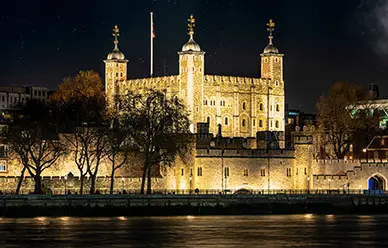
London
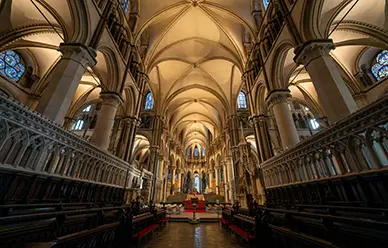
Canterbury
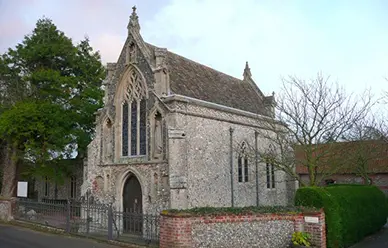
Walsingham
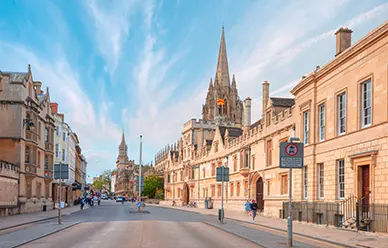
Oxford
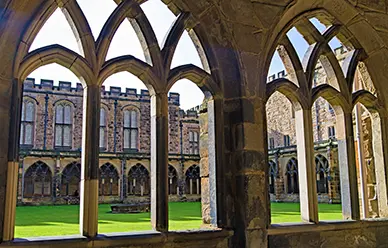
Durham
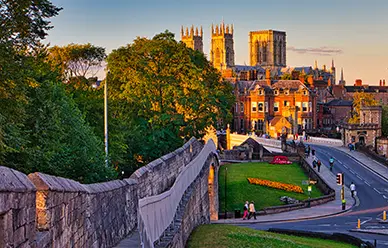
York
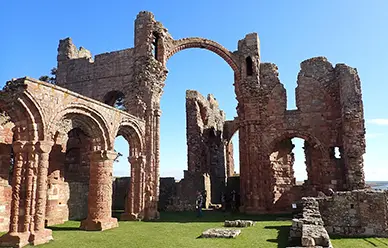
Lindisfarne
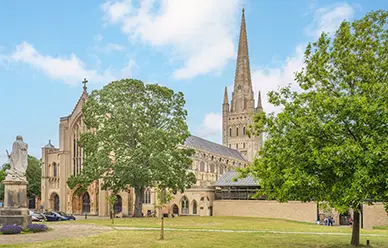
Norwich
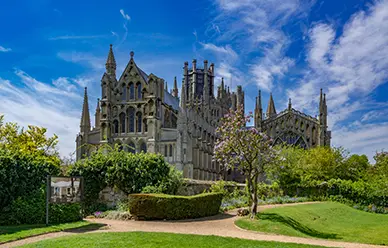
Also on Our Itineraries
Scotland Pilgrimage Sites
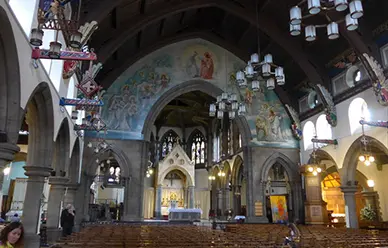
Edinburgh
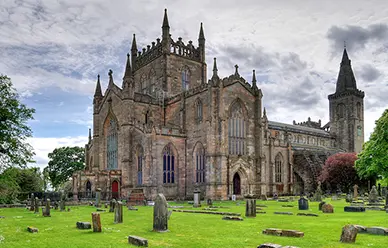
Dunfermline Abbey
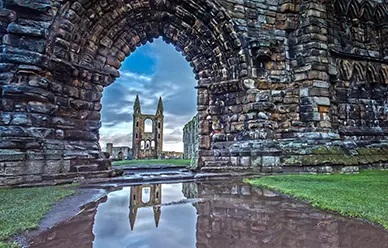
St. Andrews
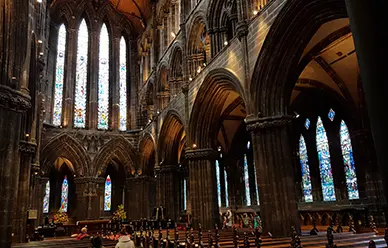
Glasgow & Carfin
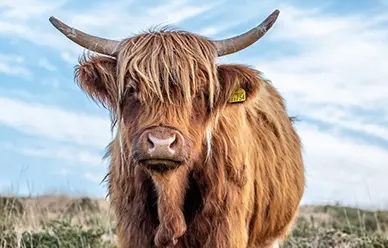
The Scottish Highlands
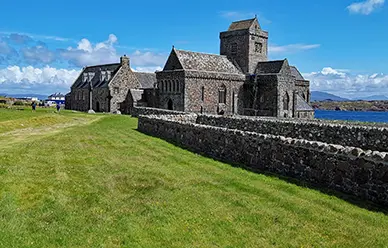
Iona
The English and Scottish Martyrs
Alban was a pagan Roman Briton who gave shelter to a priest fleeing the persecution. Watching the man pray through the night, he asked to be instructed and baptised. When the soldiers came, Alban put on the priest’s cloak and gave himself up in his place. He was beheaded on the hill above the town, and the abbey and the city of St Albans grew up around the spot. Everything that follows on this pilgrimage — the whole long English habit of hiding priests and dying instead of them — begins here, twelve centuries before the Reformation.
Bishop of Rochester for thirty years and the only bishop in England to oppose Henry VIII’s claim aloud. He was already in the Tower, old and ill, when Pope Paul III named him a cardinal — a gesture that enraged the King and hastened his death. He was beheaded on Tower Hill two weeks before his friend Thomas More, and both were buried in the Chapel of St. Peter ad Vincula inside the Tower walls. Pilgrims visit his chapel at Rochester Cathedral, built in memory of a bishop who would not be moved.
Lord Chancellor of England, author of Utopia, friend of Erasmus, and the most eminent layman in the kingdom. He resigned rather than assent, kept his silence for as long as the law allowed him to, and spent his last sixteen months in a cold cell above the Thames writing the Dialogue of Comfort Against Tribulation. His itinerary is a pilgrimage in itself: the mulberry tree he planted at Chelsea, the family tomb at Chelsea Old Church, Lincoln’s Inn where he read law, Westminster Hall where he was tried, the cell, and the scaffold.
“I die the King’s good servant, and God’s first.”
On the scaffold, Tower Hill
His head, rescued by his daughter Margaret Roper, is buried in the Roper vault at St. Dunstan’s in Canterbury — which is why a pilgrimage that begins in London so often ends up on the road to Canterbury.
The most brilliant young scholar in Oxford, singled out by Elizabeth I herself, with every worldly path open to him. He left it all, went to the Continent, became a Jesuit, and came back into England in disguise to minister to Catholics who had not seen a priest in years. Before he landed he wrote out a statement to be published if he were taken — the document known ever since as Campion’s Brag. He was betrayed at Lyford Grange, racked in the Tower, and hanged at Tyburn.
“The expense is reckoned, the enterprise is begun; it is of God, it cannot be withstood.”
Campion’s Brag, 1580
A butcher’s wife on the Shambles in York, a convert, and a mother. She kept a hidden Mass room in her house and sheltered the priests who used it, knowing exactly what the penalty was. At her trial she refused to enter any plea at all — because a trial required witnesses, and the witnesses would have had to be her own children. She was pressed to death instead. Her house on the Shambles is a working chapel today, and it is small enough that a group has to go in a few at a time, which is part of why it stays with people.
Born into a Calvinist gentry family in the north-east of Scotland and sent abroad to be educated, he was received into the Church at seventeen and later ordained a Jesuit. He returned to Scotland disguised as a horse trader, ministering in secret in a country where the Mass had been outlawed for half a century. Arrested in Glasgow, he was kept from sleep for over a week to make him name other Catholics, and he named no one. He was hanged at Glasgow Cross, and as he went he threw his rosary into the crowd. He is Scotland’s only canonized martyr of the penal era.
Forty of the martyrs of England and Wales were canonized together by Pope Paul VI in 1970, and a further eighty-five were beatified by Pope John Paul II in 1987. On a Tekton pilgrimage they are not a footnote in a guidebook. You stand at Tower Hill, in the Shambles, at Tyburn and at Glasgow Cross — the actual ground — and your guide tells you what happened there.


_-_geograph.org.uk_-_4127041.jpg)


