

Sacred Encounters
An Invitation into a Bounty of Beauty
Salzburg Cathedral | Austria
Sacred Encounters
An Odyssey of Beauty: The Journey of the Monuments Men
Paris | Bruges | Aachen | Nuremberg | Dachau | Munich
The journey begins. The Monuments, Fine Arts, and Archives Section was officially established in 1943 by President Franklin D. Roosevelt, but it took the tragic destruction of cultural and religious landmarks in Italy to fully initiate its mission in 1944. From the Jeu de Palme museum in Paris to Michelangelo’s Brugge Madonna, from a small statue of the Virgin Mary in a village church in eastern Belgium to a hidden bunker in Nuremberg, from a salt mine in the Austrian Alps to Dachau Concentration Camp, our 11-day odyssey of exploration will break your heart, offer inspiration and hope, and change the way you see beauty, the depth of faith, and power of resolve. Relive the stories of service and sacrifice, bravery and determination, ruin and restoration as we travel through a former war-torn landscape where the darkness of evil could not vanquish the light of beauty. The trip includes lodging, daily breakfast and main meal with wine or beer, entry fees, coach bus, guides, and hosted evening gatherings.

A Truly Catholic Pilgrimage
departure date
September 7, 2027
Duration
11 Days
Departure City
Land Only - No Flights Included
Activity Level
Level 2
Day 1 · September 7
Depart USA
In flight to Paris Airport (We recommend pilgrims arrive in Paris a day or two early, so as to be energized to follow the journey of the Monuments Men.)
Day 2 · September 8
Paris: Orientation and Welcome
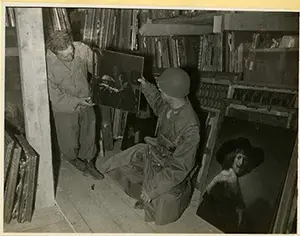
Our pilgrimage kicks off with a welcome lunch and orientation followed by a tour of the Musee d’Orsay to view a special exhibit on paintings that were recovered by the Monuments Men but whose ownership was never verified. This visit will help frame our first hosted Charcuterie and Conversation, when we reflect on various questions of the Paris art community and the Nazi occupation. (L, D) Overnight Paris
Day 3 · September 9
Paris: Sacred Sites and Saintly Service
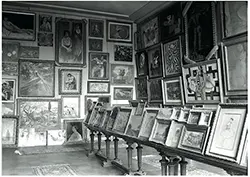
No visit to Paris would be complete without seeing the Notre Dame Cathedral. As pilgrims we not only witness a ‘new’ Notre-Dame, we stand on the threshold of a new horizon. Like the Monuments Men, we ask what will we pass on to future generations after the next fire, revolution or war. Ruins of stone and glass and a faith forgotten, or restored grandeur to rekindle a new fire burning within? Our Lady’s glorious Gothic presence suggests there is something beautiful and mysterious and unknowable at the center of it all. After attending Gregorian Mass and learning of Notre Dame’s connection to WWII and the Monuments Men, we will gather in the Latin Quarter for a Parisian Brunch. Following, we will tour the Jeu de Paume. This diminutive museum was key to the story of the Monuments Men. Over 20,000 works of art were brought here to be cataloged, photographed, and prepared for shipment to Germany. Yet it was also from within these walls of organized evil where a brave curator smuggled out the shipment records which assisted the Monuments Men to recover and restore the art to its original owners. Pilgrims will have the rest of the day free to explore other gems of Paris. (Brunch) Overnight Paris
Day 4 · September 10
Amiens to Bruges: Was it Worth It?
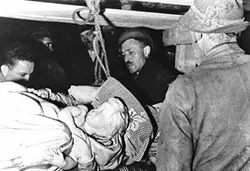
Our odyssey of exploration begins in the massive gothic Cathedral of Amiens. Monuments Men had gathered maps and advised Allied Air Force commanders to avoid targeting the cathedral, which had the further protection of strategically-placed sand bags. In the afternoon we will visit the Church of Our Lady in Bruges to witness one of the most storied outcomes of the Monuments Men: the theft, discovery and recovery of Michelangelo’s Bruges Madonna, displayed in the Church’s museum. This was one of two works featured in the Monuments Men movie. In one scene FDR asks Captain Frank Stokes if it was worth risking and losing men’s lives to save mere objects and paintings. The captain responds by recounting a letter he received from a young soldier before his death. The captain explains that people will eventually be able to rebuild their shattered towns and homes, but if you destroy an entire people’s history and cultural achievements, they will never be able to recover from that. Therefore, the fight to preserve their culture was entirely worth it. To close out our day of discovery we will celebrate dinner in the charming historic center of Bruges. (B, D) Overnight Bruges
Day 5 · September 11
Ghent to Aachen: Recovery and Remembering
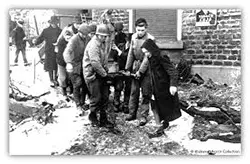
Today we follow the Monuments Men across once war-weary sites of Belgium to the Doorstep of the Reich. It is a day of recovery and remembering. Starting in the medieval gem of Ghent at the Cathedral of St. Bavo, we learn of a similar storied sacred treasure that was stolen and later recovered – The Mystic Lamb by Jan and Hubert van Eyck, (Ghent Altarpiece.) Less well-known is the tale of the ‘swaying virgin’ in the Church of the Assumption in the village of Le Gleize. During the final days of the Battle of the Bulge, the church burned to the ground. Miraculously, a 14th-century oak statue of the Virgin Mary survived. Through the coordinated efforts of the Monuments Men and local villagers, the statue was moved to a secure location. Nearby is the American Cemetery of Henri Chapelle, where we will hold a prayer service to remember the service and sacrifice of the Monuments Men and the nearly 8000 US Armed Forces who lost their lives in Germany. Our final venue is a visit to the Aachen Cathedral. Now a restored baroque gem, we will learn of the heroic efforts of US Captain Walter Huchthausen and local civilians to reinforce the structure to prevent its collapse, and safely hide the priceless Cathedral Treasury. We close our day in the historic city of Aachen, where pilgrims will be treated to a fine dinner of regional foods. (B, D) Overnight Aachen
Day 6 · September 12
Cologne to Nuremberg: Moving Toward the Heart
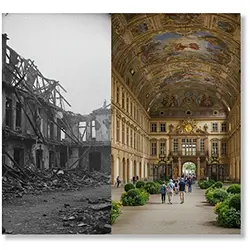
Continuing our odyssey, we visit a trio of treasures that offer icons of resilience and rebirth: Cologne Cathedral, Siegerland Museum, and the Wurzburg Residenz. The massive towers of the Cologne cathedral served as guiding lights for allied bombers who tried to avoid the cathedral. The importance of the Siegerland Museum centers around a subterranean tunnel in Siegen discovered by the Monuments Men. Holding hundreds of works of priceless art, it also contains the original score of Beethoven’s Sixth Symphony. In March, 1945, 90% of Wurzburg was destroyed by Allied bombing. Monuments Man Lieutenant John Davis Skilton is credited with saving the city’s greatest treasure -the fresco Allegory of the Planets and Continents painted by Giovanni Battista Tiepolo, located in the Würzburg Residenz. We close our day in Nuremberg, a city key to the Monuments Men story. (B, L) Overnight Nuremberg
Day 7 · September 13
Nuremberg: Trio of Treasures
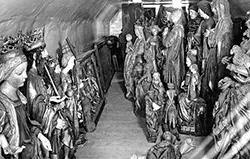
As we continue our travels through the heart of Germany, we explore the breath of the Monuments Men’s mission in a single, famed location – the historical city of Nuremberg. First, we descend into the Art Bunker, an expansive underground storage area where the Nazis hid looted art alongside Germany’s most sacred artifacts, including the Imperial Regalia of the Holy Roman Empire. Next we explore the role the Monuments Men played in the Nuremberg trials. By providing photographic albums and inventories of Nazi-looted art, they assisted Allied prosecutors to convict high-ranking Nazi officials—most notably Hermann Göring—of war crimes and cultural theft. After touring the museum, we will visit the Palace of Justice and the very court room where the Nuremberg trials were held. Our day of discovery closes with a festive dinner in the Nuremberg town center. (B, D) Overnight Nuremberg
Day 8 · September 14
Dachau to Munich: Evil and Complacency
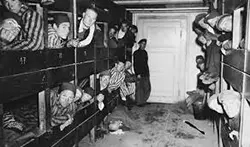
While the Dachau Concentration Camp was not directly connected to the Monuments Men, our visiting it is a profound, somber, and deeply educational experience. It is here that we confront the realities of the Holocaust as we seek to understand how systemic hatred, the erosion of democracy and complacency can lead to profound human atrocities. Not only do we put faces and names to the stolen art, we also learn of the countless acts of goodwill undertaken by thousands to protect the priceless value of human life. We will also explore the human desire and need for beauty and reverence. More than 2,700 Catholic priests and clergy were imprisoned in a dedicated “Priest Block.” Forbidden from public ministry, they secretly held Masses and fashioned sacred vessels and vestments from everyday materials, which are on display at the Carmelite Convent of the Precious Blood located next to the camp. Here we will celebrate a memorial Mass followed by lunch. Our day ends in the Bavarian capital of Munich. (B, L, D) Overnight Munich
Day 9 · September 15
Altaussee and Salzburg: Testimony of Hope
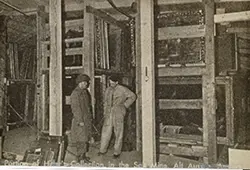
On this penultimate day of our pilgrimage, it is fitting to visit two sites that lift the spirit and cultivate the heart. Our drive through postcard landscapes of alpine countryside builds a sense of anticipatory excitement for the mystery and miracle of their stories. Our first stop is the Salzburg Cathedral. In October 1944, this magnificent baroque structure sustained significant damage when an Allied air raid bomb crashed through its central dome. Overcoming severe postwar material shortages and labor deficits, the community banded together to restore their beloved icon. Today the cathedral towers and dome rise to the heavens like the surrounding mountains and give testimony to the power of hope and human resolve. Just 45 minutes from Salzburg, the Altaussee salt mine served as the Nazis’ primary hiding place for Europe’s most priceless masterpieces. In May 1945, Monuments Men Capt. Robert Posey and Pfc. Lincoln Kirstein discovered over 6,600 plundered artworks there, including Michelangelo’s Madonna of Bruges and the Ghent Altarpiece. Local miners had bravely thwarted the Nazi plot to destroy the art by removing the explosives. We will tour the mine of this heroic and happy tale. After returning to Munich, pilgrims are invited to gather for an evening of Sips and Stories. (B, L) Overnight Munich
Day 10 · September 16
Munich: Sacred encounters
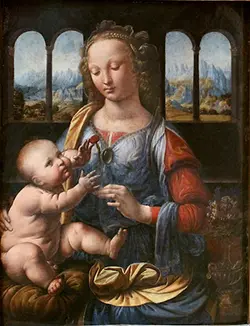
Munich served as the central collection point for art works recovered by the Monuments Men. It is fitting that we close our last full day of our sojourn of beauty and reverence with a pair of treasures to celebrate and honor their service. Our day begins with high mass at St. Michael’s Church, a Renaissance masterpiece that was nearly destroyed during an allied bombing. We will also have a chance to visit the tomb of Bl Rupert Mayer, a Jesuit priest who led the Catholic resistance against the Nazis. Following brunch we will tour the Alte Pinakothtek Museum, which holds such sacred masterpieces as Da Vinci’s Madonna of the Carnation, and the Canigiani Holy Family by Raphael. Even though many priceless works were destroyed by the Nazis, our visit reminds us that art is a testimony to the heights of human inspiration and endeavor and is meant for the edification and pleasure of all. No evil or ideology can destroy the human need and desire to encounter beauty. We close our pilgrimage with a special dinner and a celebratory toast to the Monuments Men and all those whose faith and efforts gave us what we behold today and pass on to our children’s children. (Brunch) Overnight Munich
Day 11 · September 17
Departures
Pilgrims return home or are welcome to stay in Munich for Oktoberfest.
Day 1 · September 7
Depart USA
In flight to Paris Airport (We recommend pilgrims arrive in Paris a day or two early, so as to be energized to follow the journey of the Monuments Men.)
Meals: Breakfast, Dinner, Mass
Day 2 · September 8
Paris: Orientation and Welcome
Our pilgrimage kicks off with a welcome lunch and orientation followed by a tour of the Musee d’Orsay to view a special exhibit on paintings that were recovered by the Monuments Men but whose ownership was never verified. This visit will help frame our first hosted Charcuterie and Conversation, when we reflect on various questions of the Paris art community and the Nazi occupation. (L, D) Overnight Paris
Meals: Breakfast, Dinner, Mass
Day 3 · September 9
Paris: Sacred Sites and Saintly Service
No visit to Paris would be complete without seeing the Notre Dame Cathedral. As pilgrims we not only witness a ‘new’ Notre-Dame, we stand on the threshold of a new horizon. Like the Monuments Men, we ask what will we pass on to future generations after the next fire, revolution or war. Ruins of stone and glass and a faith forgotten, or restored grandeur to rekindle a new fire burning within? Our Lady’s glorious Gothic presence suggests there is something beautiful and mysterious and unknowable at the center of it all. After attending Gregorian Mass and learning of Notre Dame’s connection to WWII and the Monuments Men, we will gather in the Latin Quarter for a Parisian Brunch. Following, we will tour the Jeu de Paume. This diminutive museum was key to the story of the Monuments Men. Over 20,000 works of art were brought here to be cataloged, photographed, and prepared for shipment to Germany. Yet it was also from within these walls of organized evil where a brave curator smuggled out the shipment records which assisted the Monuments Men to recover and restore the art to its original owners. Pilgrims will have the rest of the day free to explore other gems of Paris. (Brunch) Overnight Paris
Meals: Breakfast, Dinner, Mass
Day 4 · September 10
Amiens to Bruges: Was it Worth It?
Our odyssey of exploration begins in the massive gothic Cathedral of Amiens. Monuments Men had gathered maps and advised Allied Air Force commanders to avoid targeting the cathedral, which had the further protection of strategically-placed sand bags. In the afternoon we will visit the Church of Our Lady in Bruges to witness one of the most storied outcomes of the Monuments Men: the theft, discovery and recovery of Michelangelo’s Bruges Madonna, displayed in the Church’s museum. This was one of two works featured in the Monuments Men movie. In one scene FDR asks Captain Frank Stokes if it was worth risking and losing men’s lives to save mere objects and paintings. The captain responds by recounting a letter he received from a young soldier before his death. The captain explains that people will eventually be able to rebuild their shattered towns and homes, but if you destroy an entire people’s history and cultural achievements, they will never be able to recover from that. Therefore, the fight to preserve their culture was entirely worth it. To close out our day of discovery we will celebrate dinner in the charming historic center of Bruges. (B, D) Overnight Bruges
Meals: Breakfast, Dinner, Mass
Day 5 · September 11
Ghent to Aachen: Recovery and Remembering
Today we follow the Monuments Men across once war-weary sites of Belgium to the Doorstep of the Reich. It is a day of recovery and remembering. Starting in the medieval gem of Ghent at the Cathedral of St. Bavo, we learn of a similar storied sacred treasure that was stolen and later recovered – The Mystic Lamb by Jan and Hubert van Eyck, (Ghent Altarpiece.) Less well-known is the tale of the ‘swaying virgin’ in the Church of the Assumption in the village of Le Gleize. During the final days of the Battle of the Bulge, the church burned to the ground. Miraculously, a 14th-century oak statue of the Virgin Mary survived. Through the coordinated efforts of the Monuments Men and local villagers, the statue was moved to a secure location. Nearby is the American Cemetery of Henri Chapelle, where we will hold a prayer service to remember the service and sacrifice of the Monuments Men and the nearly 8000 US Armed Forces who lost their lives in Germany. Our final venue is a visit to the Aachen Cathedral. Now a restored baroque gem, we will learn of the heroic efforts of US Captain Walter Huchthausen and local civilians to reinforce the structure to prevent its collapse, and safely hide the priceless Cathedral Treasury. We close our day in the historic city of Aachen, where pilgrims will be treated to a fine dinner of regional foods. (B, D) Overnight Aachen
Meals: Breakfast, Dinner, Mass
Day 6 · September 12
Cologne to Nuremberg: Moving Toward the Heart
Continuing our odyssey, we visit a trio of treasures that offer icons of resilience and rebirth: Cologne Cathedral, Siegerland Museum, and the Wurzburg Residenz. The massive towers of the Cologne cathedral served as guiding lights for allied bombers who tried to avoid the cathedral. The importance of the Siegerland Museum centers around a subterranean tunnel in Siegen discovered by the Monuments Men. Holding hundreds of works of priceless art, it also contains the original score of Beethoven’s Sixth Symphony. In March, 1945, 90% of Wurzburg was destroyed by Allied bombing. Monuments Man Lieutenant John Davis Skilton is credited with saving the city’s greatest treasure -the fresco Allegory of the Planets and Continents painted by Giovanni Battista Tiepolo, located in the Würzburg Residenz. We close our day in Nuremberg, a city key to the Monuments Men story. (B, L) Overnight Nuremberg
Meals: Breakfast, Dinner, Mass
Day 7 · September 13
Nuremberg: Trio of Treasures
As we continue our travels through the heart of Germany, we explore the breath of the Monuments Men’s mission in a single, famed location – the historical city of Nuremberg. First, we descend into the Art Bunker, an expansive underground storage area where the Nazis hid looted art alongside Germany’s most sacred artifacts, including the Imperial Regalia of the Holy Roman Empire. Next we explore the role the Monuments Men played in the Nuremberg trials. By providing photographic albums and inventories of Nazi-looted art, they assisted Allied prosecutors to convict high-ranking Nazi officials—most notably Hermann Göring—of war crimes and cultural theft. After touring the museum, we will visit the Palace of Justice and the very court room where the Nuremberg trials were held. Our day of discovery closes with a festive dinner in the Nuremberg town center. (B, D) Overnight Nuremberg
Meals: Breakfast, Dinner, Mass
Day 8 · September 14
Dachau to Munich: Evil and Complacency
While the Dachau Concentration Camp was not directly connected to the Monuments Men, our visiting it is a profound, somber, and deeply educational experience. It is here that we confront the realities of the Holocaust as we seek to understand how systemic hatred, the erosion of democracy and complacency can lead to profound human atrocities. Not only do we put faces and names to the stolen art, we also learn of the countless acts of goodwill undertaken by thousands to protect the priceless value of human life. We will also explore the human desire and need for beauty and reverence. More than 2,700 Catholic priests and clergy were imprisoned in a dedicated “Priest Block.” Forbidden from public ministry, they secretly held Masses and fashioned sacred vessels and vestments from everyday materials, which are on display at the Carmelite Convent of the Precious Blood located next to the camp. Here we will celebrate a memorial Mass followed by lunch. Our day ends in the Bavarian capital of Munich. (B, L, D) Overnight Munich
Meals: Breakfast, Dinner, Mass
Day 9 · September 15
Altaussee and Salzburg: Testimony of Hope
On this penultimate day of our pilgrimage, it is fitting to visit two sites that lift the spirit and cultivate the heart. Our drive through postcard landscapes of alpine countryside builds a sense of anticipatory excitement for the mystery and miracle of their stories. Our first stop is the Salzburg Cathedral. In October 1944, this magnificent baroque structure sustained significant damage when an Allied air raid bomb crashed through its central dome. Overcoming severe postwar material shortages and labor deficits, the community banded together to restore their beloved icon. Today the cathedral towers and dome rise to the heavens like the surrounding mountains and give testimony to the power of hope and human resolve. Just 45 minutes from Salzburg, the Altaussee salt mine served as the Nazis’ primary hiding place for Europe’s most priceless masterpieces. In May 1945, Monuments Men Capt. Robert Posey and Pfc. Lincoln Kirstein discovered over 6,600 plundered artworks there, including Michelangelo’s Madonna of Bruges and the Ghent Altarpiece. Local miners had bravely thwarted the Nazi plot to destroy the art by removing the explosives. We will tour the mine of this heroic and happy tale. After returning to Munich, pilgrims are invited to gather for an evening of Sips and Stories. (B, L) Overnight Munich
Meals: Breakfast, Dinner, Mass
Day 10 · September 16
Munich: Sacred encounters
Munich served as the central collection point for art works recovered by the Monuments Men. It is fitting that we close our last full day of our sojourn of beauty and reverence with a pair of treasures to celebrate and honor their service. Our day begins with high mass at St. Michael’s Church, a Renaissance masterpiece that was nearly destroyed during an allied bombing. We will also have a chance to visit the tomb of Bl Rupert Mayer, a Jesuit priest who led the Catholic resistance against the Nazis. Following brunch we will tour the Alte Pinakothtek Museum, which holds such sacred masterpieces as Da Vinci’s Madonna of the Carnation, and the Canigiani Holy Family by Raphael. Even though many priceless works were destroyed by the Nazis, our visit reminds us that art is a testimony to the heights of human inspiration and endeavor and is meant for the edification and pleasure of all. No evil or ideology can destroy the human need and desire to encounter beauty. We close our pilgrimage with a special dinner and a celebratory toast to the Monuments Men and all those whose faith and efforts gave us what we behold today and pass on to our children’s children. (Brunch) Overnight Munich
Meals: Breakfast, Dinner, Mass
Day 11 · September 17
Departures
Pilgrims return home or are welcome to stay in Munich for Oktoberfest.
Meals: Breakfast, Dinner, Mass
Departure
September 7, 2027
Pilgrimage Price
$4,195
per person
Pricing is estimated.
Questions? Call Us
(317) 574-4191
"It was wonderful. Good balance of gothic, gratitude and grapes. The gratitude will be amazing. "
Edna S.
Pilgrim from Victor, MT
Pilgrimage Route
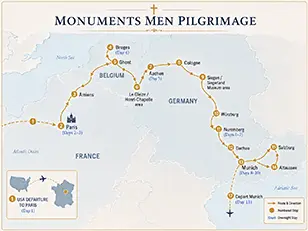
Paris | Bruges | Aachen | Nuremberg | Dachau | Munich
Ready to Walk These Sacred Sites?
Your place on this pilgrimage awaits.
Anticipated Weather · September
Paris
55–73°F
Mild & Variable · September
Comfortable late-summer days with long stretches of sun broken by passing showers and cooler evenings along the Seine. Good walking weather for those who intend to arrive somewhere other than where they started.
Amiens / Bruges / Ghent
52–68°F
Cool & Damp · September
The North Sea lowlands run grey and drizzly even in early autumn, with damp mornings and a raw edge to the wind in open squares and cemeteries. A cold, wet hour at Henri-Chapelle is not an inconvenience to be endured but something a pilgrim can offer.
Germany & Austrian Alps
48–72°F
Crisp & Changeable · September
Bright afternoons in Nuremberg and Munich give way to sharp mornings, and the alpine drive toward Altaussee runs ten degrees colder still — the salt mine holds near 45°F year-round. September in Bavaria rewards the traveler who packs for the weather rather than the postcard.
Pack layers you can add and shed through the day, a lightweight waterproof jacket for the Belgian and northern French legs, and a warm sweater or fleece for the Altaussee mine and alpine mornings. Comfortable, broken-in walking shoes matter on cathedral stone and cobbled town centers. Modest attire is required at all sacred sites (shoulders and knees covered).
Pricing Information
The total pricing is based on the following components:
Base price
$4,195
Air taxes & fuel surcharges
$NA
Gratuities (added to final invoice)
$165
See brochure for information about single rooms.
Please note: Pricing is estimated. The final invoice will be emailed to you approximately 3 months prior to departure.
Please note: Pricing is estimated. The final invoice will be emailed to you approximately 3 months prior to departure.
Sacred Encounters
Meet Your Pilgrimage Leaders
Fr. Tom Lankenau
An experienced traveler, Fr. Tom Lankenau loves visiting churches and museums and making them the focal point of pilgrimages. Through self study and developing courses on the Church and the arts, he brings a unique eye, heartfelt passion, encyclopedic knowledge and an evangelizing spirit in his quest to share the ‘Gospel of Beauty.’

Kathleen McCance
Kathleen McCance inherited the travel gene and love of art and design from her family. She has decades of experience in the international travel industry and has traveled extensively. Inspired by, and happy to add pilgrimages to her travel repertoire, Katheen believes many of her experiences and adventures are divinely inspired by the Holy Spirit. She hopes your travel journeys and pilgrimages are as fun and spiritually impactful as hers!
What Pilgrims Are Saying
Even though the structure and the timing of a pilgrimage are orchestrated, God moments are not. This pilgrimage left room for the me-and-Thee experience.
Diana K.
Pilgrim from Victor, MT
How cathedrals were so important to the people of the times to finance and build them.
And, of course…Normandy! Many tears were noted.
Edna S.
Pilgrim from Victor, MT
We were treated like adults not a high school tour group. This made every moment special. Father Lankenau was excellent.
Victoria D.
Pilgrim from Chicago, IL