


Tekton Ministries
Publish Date: October 21, 2026
The flight out of Newark sits on the tarmac for three hours, and the connection in Frankfurt is gone. The church you promised your people for the second morning is closed for a funeral. A strong wind cancels the boat on the Sea of Galilee. Every priest who leads a group long enough will stand in front of forty tired faces and say, "Plans have changed." Good pilgrimage contingency planning matters, and we do a great deal of it on your behalf. But the part that decides whether a disruption becomes a wound or a grace isn't logistical. It depends on what kind of traveler each person believed they were when they left home.
We have watched this for thirty years. The same cancelled boat that ruins one person's day becomes, for the person in the next seat, the moment they finally started praying. The difference is rarely temperament. It's posture. And posture is something a priest can shape, long before anyone boards a plane.
Four Ways to Travel, Four Ways to React
Most people picture a pilgrimage as a blend of three other things: a vacation, a retreat, and a sightseeing itinerary. It is none of them. Naming all four postures helps, because every one shows up on a parish pilgrimage, often inside the same person on the same day.
The vacationer travels to rest. There is nothing wrong with that. God commands Sabbath, and a good vacation is a real gift. But a vacation is supposed to be easy, and a pilgrimage often isn't. The vacationer measures the days by comfort, so a disruption lands as a loss: the hotel is louder than expected, the lunch was late, this is not what was paid for. The vacationer's instinct when plans change is to look for someone to fix it or someone to blame.
The tourist travels to see. The itinerary is a list, and the value of each day equals the number of things checked off it. Even at holy places, this is travel to a religious site rather than religious travel. A closed basilica isn't an inconvenience to the tourist. It's a hole in the collection. You'll hear it in the bus: "We came all this way and didn't even get to go inside."
The retreatant withdraws. A retreat is a movement away from the world, into silence, to seek God there. This is a holy desire, and many devout parishioners (and not a few priests) arrive in the Holy Land or Rome secretly hoping for one. But withdrawal needs a protected space: quiet, a stable schedule, the same chapel each morning. Nobody travels to Fatima to spend the week alone in a hotel room. When the road turns noisy and unpredictable, the retreatant feels robbed of recollection. The frustration is quieter than the tourist's, but it's real, and it's easy to mistake for spiritual seriousness.
The pilgrim moves toward something. He travels to a sacred place for a religious purpose, praying along the way, and understands that the going is itself part of the prayer. The pilgrim is not indifferent to the plan. He wanted that Mass at that altar too. But he never believed the plan was the point. The road was always going to ask something of him, and now it has.
Notice what happens to each of them at the gate in Frankfurt. The vacationer is angry. The tourist is counting what he'll miss. The retreatant is disappointed that the day is lost to airports. The pilgrim is tired too, but he's also quietly asking, "Lord, what do You want from this afternoon?" Only one of those four people can receive what the delay is offering.
Why the Pilgrim Can Absorb What the Others Can't
The Church has always described the Christian life as a journey. We are homo viator, people on the way, and as the Letter to the Hebrews puts it, here we have no lasting city (Hebrews 13:14). A pilgrimage simply makes that truth physical for ten days. Of course the road changes. Roads do.
Scripture is full of rerouted travelers. The Holy Family set out for Bethlehem because of a Roman census, then fled into Egypt in the night on the word of an angel (Matthew 2:13–15). Saint Paul tried to preach in Asia and was forbidden by the Holy Spirit, tried Bithynia and was stopped again, and only then received the vision of the man from Macedonia calling him across the sea (Acts 16:6–10). The Magi, warned in a dream, went home by another road (Matthew 2:12), and they went home changed. In none of these stories is the detour a failure of the journey. It's where God does His work.
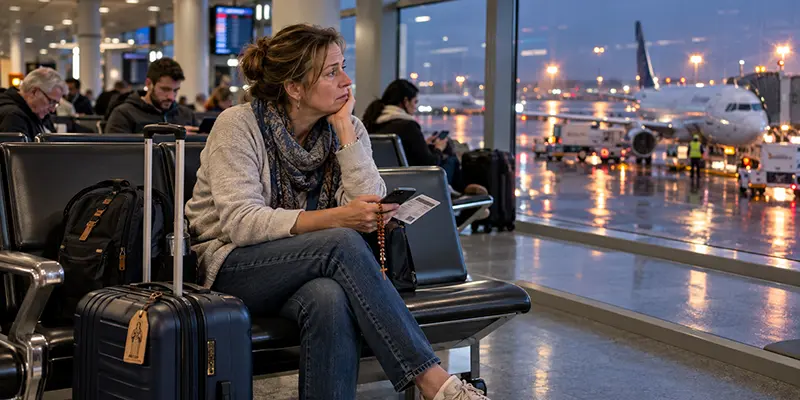
A delayed departure becomes a chapel. For the pilgrim, the waiting is part of the road, not time stolen from it.
This is why the pilgrim posture isn't just a nicer attitude. It's the only one that can make sense of disruption theologically. The vacationer and tourist have no framework for loss except complaint. The retreatant has a framework, but it's built for stability. The pilgrim alone expected to be displaced, and so he can offer the displacement up. Long lines, a missed meal, a hot afternoon on a bus: these become small penances joined to the Cross, and they bear fruit precisely because they weren't chosen.
Pilgrimage Contingency Planning Starts in the Formation Room
The most effective thing you can do about disruption happens months before departure. When you gather your people for formation, teach them the four postures by name. Don't present the vacationer and tourist as villains; most of us have been both. Ask each person to be honest about which one they tend toward. The parishioner who laughs and admits, "Father, I'm definitely the tourist," has already begun to change.
Then say plainly: something on this pilgrimage will not go as planned. We don't know what yet. Encourage them to come full of hope but without a script. Hope asks and trusts; expectation demands and resents, and the difference between them is entitlement. Have them carry three to five concrete intentions rather than a mental list of photographs. Suggest that when the first thing goes wrong, they treat it as the moment the pilgrimage really begins. People who have been told in advance that the road will ask something of them respond very differently when it does.
Every registered Tekton pilgrim has access to A Pilgrim Heart, our seven-session preparation retreat, which lays exactly this groundwork. Pair it with your own sessions and with our reflection on how to prepare for a Catholic pilgrimage, and your group will arrive with a shared vocabulary for the hard days. That shared vocabulary is the best pilgrimage contingency planning there is.
Your Role When the Plan Changes, and What Isn't Your Role
When something breaks, you shouldn't be on the phone with an airline. Rebooking flights, finding a new Mass time, rerouting the bus, and adjusting reservations belong to your Pilgrimage Manager and our local team, who handle this every week. Your people need you free for something only you can do.
Name it quickly and honestly. Rumor fills silence fast on a bus. Once you know the facts, tell the group what changed and what happens next, without drama and without minimizing.
Give it meaning. Remind them of the conversation you had in formation. "Remember the four ways to travel? This is the moment we find out which one we are." A single sentence like that can turn a busload of vacationers back into pilgrims.
Pray right away. A decade of the Rosary at the gate, a psalm read aloud in the hotel lobby. Prayer in the moment teaches more than any homily afterward.
Watch your own posture. Priests have their own temptation here, and it's usually the retreatant's. You may have been looking forward to that quiet Mass at dawn as much as anyone. Your people will read your face before they hear your words. If you receive the change as an offering, most of them will follow.
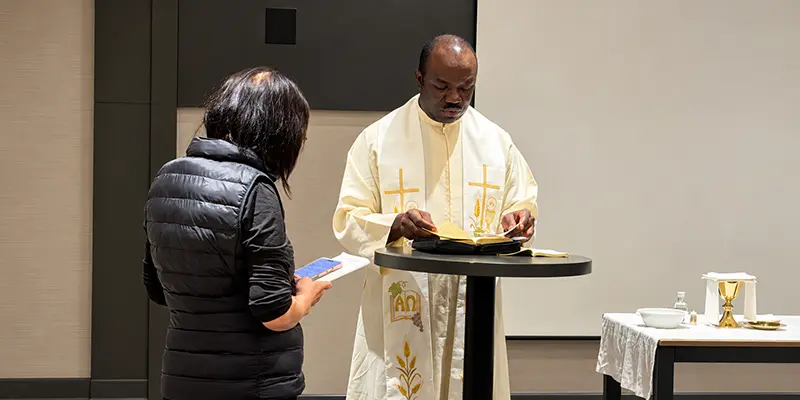
The altar you didn't plan on can become the one your people remember longest.
Common Disruptions and a Pilgrim's Response
No list of solutions to pilgrimage problems can cover everything, but a few situations come up again and again.
The missed connection. Hours in an airport feel wasted to the tourist. For a pilgrim, they're a rare stretch of unscheduled time together. Some of the best faith conversations of a pilgrimage happen at a departure gate. If you can, pray the Liturgy of the Hours aloud with anyone who wants to join.
The closed church. Sacred sites are living places of worship, and funerals, feast days, and restoration work take precedence over visitors. We'll substitute where we can. Meanwhile, standing outside a locked door is a fine occasion to talk about spiritual longing, and about the many people in your parish who stand outside the Church's doors for their own reasons.
The Mass that moves. We secure Mass times for your group, and occasionally a shrine reassigns a slot or a delay makes one impossible. When the altar changes, keep the homily. The Gospel you prepared for Capernaum may land even harder in a hotel conference room at nine at night.
The pilgrim who falls ill. Our team will handle doctors and logistics. Your part is presence: a visit, a blessing, the Anointing of the Sick if it's appropriate. A pilgrim who spends a day in a hotel room isn't missing the pilgrimage. They are making a harder one, and they need to hear that from their pastor.
The lost suitcase. Few things test detachment faster. The pilgrim who finishes the week in borrowed clothes usually comes home with a story about how little they actually needed. For the deeper emotional struggles that disruptions can stir up, see our reflection on what to say when pilgrims struggle.
Returning by Another Road
Ask any group at their reunion what they remember, and you'll hear about the disruptions. The Mass on the hotel terrace. The night in the airport when a quiet parishioner led the Rosary. The day the boat didn't sail and everyone prayed on the shore instead. The changed plan tends to become the story, because it was the moment people stopped consuming the pilgrimage and began to receive it.
That's the fruit worth watching for back home. A tourist returns with photographs. A pilgrim returns more patient in traffic, slower to complain, more willing to let God rewrite an ordinary Tuesday. If your people learn on the road that an interrupted plan can be an invitation, they'll carry that into marriages, jobs, illnesses, and grief for the rest of their lives. They will have gone home by a different way.
Ready to lead your people as pilgrims? We handle the logistics, including the ones nobody sees coming, so you can be fully present as their shepherd. Learn how to Lead Your Own Group, or See All Upcoming Pilgrimages to find a date for your parish.