

Croatia Travel Guide for Medjugorje Pilgrims
Your Pilgrimage Begins and Ends in Croatia
This Croatia travel guide is written for Medjugorje pilgrims, because that is who nearly all of our pilgrims in Croatia are. Medjugorje is a village in Bosnia and Herzegovina, and it has no airport of its own, so the journey runs through Croatia at both ends. You land at Split or Dubrovnik, drive inland to the village, and spend a day or three on the Dalmatian coast before or after those days. Several of our itineraries fly into one of the two cities and home out of the other. What follows is what you need settled before you leave: entry requirements, what each month on the coast is actually like, the airport, money in a country that now uses the euro, what closes on Sunday, and where the Church has been praying here for seventeen centuries.
A tourist treats the last days as the wind-down. A pilgrim knows the wind-down is where the graces settle. Prepare for Croatia as carefully as you prepare for Medjugorje, and you will arrive on the coast with attention to spare.
Already registered? Your pilgrim packet arrives two to three weeks before departure with hotel details, your final itinerary, and specific guidance from your Pilgrimage Manager. This guide is what you need before that packet reaches you. The Bosnian side of your pilgrimage, the border, and the village itself are covered in our Bosnia travel guide; the interior preparation happens in A Pilgrim Heart.
Entry Requirements for Croatia
Croatia joined the Schengen Area on January 1, 2023, so it now follows the same rules as Italy, France, and Spain. The Schengen Area is a group of thirty European countries that have abolished passport checks between themselves and share one external border instead, which is why a traveler is checked once on the way into Europe rather than at every country along the way. Bosnia and Herzegovina is not part of it. For a U.S. passport holder on a pilgrimage that means no visa, no fee, and no form to file today. Two things have changed at the border since most pilgrims last crossed one, and a third is coming.
-
Check the passport dates, both of them
Schengen rules ask for a passport issued within the last ten years and valid for at least three months beyond the day you leave the Schengen Area. We recommend six months of validity, because airlines apply their own margins and the pilgrim who gets stopped at check-in in Chicago is never the one who renewed early. The same passport carries you into Bosnia and back.
-
Expect fingerprints and a photo, not a stamp
Since April 2026 the European Entry/Exit System has been in full operation at every Schengen border, including Split and Dubrovnik. On your first entry an officer or a kiosk records your fingerprints and a facial image, and the system tracks your days from then on. It takes a minute or two. There is nothing to apply for in advance, though the EU's optional Travel to Europe app lets you pre-register your passport details in the 72 hours before you fly.
-
Know that ETIAS is coming, and that it is not here yet
ETIAS is the European Union's planned pre-travel authorization for visa-exempt visitors, including Americans. When it starts you will apply online, pay about 20 euros (roughly $23), and hold an authorization good for three years across all Schengen countries. As of this writing no applications are being accepted and the launch has slipped again, most recently toward 2027. Do not pay a third-party site that claims otherwise. Tekton will tell registered pilgrims the moment it becomes a requirement.
-
Count your Schengen days if you are extending
A U.S. visitor may spend 90 days in any 180 in the Schengen Area. No Tekton pilgrimage comes near that, but if you are adding private travel in Italy or elsewhere in Europe before or after, the Croatian days count. The days in Bosnia and Herzegovina do not.
Two countries, one passport. Bosnia and Herzegovina is in neither the European Union nor Schengen, so Medjugorje sits outside all of the above. You will show your passport at the border each way and receive an old-fashioned stamp. The Bosnia guide walks through the crossing itself.
Croatian Coast Weather Month by Month
The Dalmatian coast has a true Mediterranean climate: hot, dry, brilliant summers and mild, wet winters. Split runs a degree or two hotter than Dubrovnik in July, Dubrovnik a degree or two milder in January, and both are noticeably kinder than Medjugorje, which sits inland behind the mountains and swings further in both directions.
| Month | Split high | Dubrovnik high | Nights | Rain | What it feels like |
|---|---|---|---|---|---|
| January | 51°F | 54°F | 44°F | 3.9 in | Mild for winter, but wet and windy. The bura can cut through a coat. |
| February | 52°F | 55°F | 44°F | 3.9 in | Much like January. Dubrovnik celebrates Saint Blaise on the 3rd. |
| March | 57°F | 58°F | 47°F | 3.7 in | Brightening. Still bring the rain layer. |
| April | 63°F | 62°F | 52°F | 3.6 in | Spring proper. Green hills, cool nights, showers that pass quickly. |
| May | 73°F | 71°F | 60°F | 2.8 in | Warm days, cool evenings, sea not yet full of swimmers. Excellent walking weather. |
| June | 80°F | 78°F | 66°F | 1.7 in | Summer arrives. Long light, dry days, comfortable mornings. |
| July | 86°F | 83°F | 71°F | 1.1 in | Hot and dry on the coast. Old Town stone radiates heat by mid-afternoon. |
| August | 85°F | 83°F | 71°F | 2.9 in | The hottest stretch. Start early, rest at midday as the Dalmatians do. |
| September | 77°F | 77°F | 65°F | 3.4 in | Still warm, sea at its warmest, crowds thinning. Many pilgrims' favourite month. |
| October | 68°F | 70°F | 59°F | 4.7 in | Comfortable and clear early, wetter as the month closes. A fine month for walking. |
| November | 58°F | 62°F | 51°F | 5.6 in | The wettest month. Quiet, cool, and often grey. |
| December | 53°F | 56°F | 46°F | 4.7 in | Cool and damp. Advent in Dalmatia is understated and lovely. |
- Hot, dry, full sun
- Mild and variable
- Cool and wet
- Best months for walking
Average daily highs, overnight lows at Dubrovnik, and monthly rainfall at Dubrovnik, from the Croatian Meteorological and Hydrological Service's Climate Atlas (1971–2000 normals). Recent summers have run hotter than these averages. The Adriatic reaches about 71°F in September.
The bura and the jugo
Two winds shape the coast, and Dalmatians name them the way Americans name hurricanes. The bura is a cold, dry wind that pours down off the mountains, most often from late autumn to early spring; it clears the sky to a hard blue and can make a 50-degree day feel like 35. The jugo blows warm and damp from the south and brings the rain. If your pilgrimage falls between November and March, pack a windproof layer, not just a warm one.
Arriving at Split or Dubrovnik
Most Tekton pilgrims enter Croatia through one of two small coastal airports, often flying into one and home from the other so that the pilgrimage sees both Split and Dubrovnik. Neither airport is intimidating. Both are single-terminal, and on a normal day you are through passport control and standing beside the coach within an hour of landing.
On arrival
Your transatlantic flight will connect somewhere in Europe, so your first Schengen entry, and your Entry/Exit System fingerprints and photo, may happen in Frankfurt, Munich, Vienna, or Amsterdam rather than in Croatia. If so, Split or Dubrovnik is a domestic-style arrival with no passport check at all. If you enter Schengen at the Croatian airport itself, allow a few extra minutes at the kiosks. After baggage claim your Tekton representative meets the group in the arrivals hall.
Split's airport sits at Kaštela, about fifteen miles west of the city along the bay. Dubrovnik's is at Čilipi, about twelve miles southeast of the Old Town, and the road in gives you the first long view of the walls from above. From either, Medjugorje is two to two and a half hours by coach with one border crossing.
On departure
Plan on being at the airport two and a half to three hours before an international departure; your Pilgrimage Manager sets the exact time. Dubrovnik in particular can build long queues on summer mornings when several departures leave within the same hour. On the way out, your Schengen exit is recorded at the last Schengen airport you touch, which again may be your European connection rather than Croatia.
If your homeward flight is booked through a Middle Eastern or Turkish hub instead, the exit happens at Split or Dubrovnik itself.
Holy water, oil, and the liquids rule. Water from the Medjugorje springs, blessed oil, and any bottle of Dalmatian olive oil or wine must travel in checked luggage. Rosaries, medals, and stone from the hills go anywhere. Pack the liquids the night before the coast departure, not at the gate.
General Information
- Capital city
- Zagreb
- Largest city
- Zagreb (Split is second, and the largest on the coast)
- Official language
- Croatian, written in the Latin alphabet
- Faith
- Roughly four in five Croatians are Catholic
- Time zone
- Central European Time · 6 hours ahead of U.S. Eastern
- Country code
- +385
- Emergency number
- 112 (police 192 · fire 193 · ambulance 194)
- Driving side
- Right, as at home
Will people speak English?
Along the coast, nearly everyone under fifty does, and well; Dalmatia has hosted visitors for a long time. Your knowledgeable Catholic and other Christian guides speak fluent English. A few words of Croatian are welcomed all the same. Dobar dan is good day, hvala is thank you, molim is please, and Bog, which simply means "God," is how Dalmatians say both hello and goodbye in passing. You will hear it a hundred times a day.
Emergency numbers
Dial 112 from any phone in Croatia, including an American mobile with no local SIM, and an operator who speaks English will route you to police, fire, or ambulance. The three direct numbers (192, 193, 194) also work; 112 is simply the one to remember, and it works across Bosnia and Herzegovina too. No area code, no country code.
You will almost certainly never dial it. Your Pilgrimage Manager is with the group throughout and is the first person to find. Save the number and your hotel address to your phone before you leave home anyway.
Jet lag
Six hours is a full night's difference. Most pilgrims find the second afternoon hardest. Stay up until a normal local bedtime on arrival day, drink more water than feels necessary, and take the first morning's light by the sea; the coast makes this easier than most places.
The Euro, Cards, and Gratuities
What currency does Croatia use?
The euro, since January 1, 2023. Croatia's old currency was the kuna, so if you traveled here before then, or are reading an older guidebook, set that aside — the kuna is no longer legal tender and cannot be spent. Prices are in euros, and U.S. dollars are not accepted in shops or restaurants. This is the single biggest practical difference between the Croatian days and the Medjugorje days, where dollars are often taken.
Should I buy euros before I leave?
No. An American bank, and worse, an airport exchange counter, sets its own rate well away from the market and adds a fee on top. A bank ATM in Croatia gives you something close to the true rate. Three points worth knowing:
- Use an ATM attached to a bank (Zagrebačka banka, PBZ, OTP, Erste, Raiffeisen) rather than a standalone machine in the Old Town. The free-standing Euronet machines that line the tourist streets charge among the worst rates in Europe.
- Always choose to be charged in euros, not dollars, at any machine or card terminal that offers the choice. Billing in dollars is dynamic currency conversion, and declining it is free money.
- Withdraw once and withdraw enough. Most U.S. cards charge a flat fee per withdrawal.
Euros are also the practical currency in Medjugorje itself, so what you withdraw on the coast works in the village. The convertible mark you may be handed in change in Bosnia does not work the other way; the Bosnia guide explains that side.
Cards and what to tell your bank
Visa and Mastercard are accepted nearly everywhere on the coast, including for small purchases; Croatia moved to tap-to-pay early and thoroughly. Discover is rarely accepted, and American Express is accepted less often than at home. Before you leave, notify your card issuer of your travel dates and check the foreign transaction fee. Carry some cash all the same for market stalls, small chapels' candle boxes, and the coffee you will buy more of than you expect.
What about gratuities?
Gratuities for your guide and driver are customary. Tekton sets out specific guidance in your pilgrim packet so that the whole group works from the same expectation, and your Pilgrimage Manager will confirm the arrangement before the final day. In Croatian restaurants and cafes, service is not added to the bill and rounding up, or leaving a little in cash, is the local habit; percentage tipping is an import.
Sundays, Coffee, and Fjaka
Three things set the pace of a Croatian day, and none of them is written on a sign. Pilgrims who know about them in advance stop fighting the rhythm and start keeping it.
Sunday is closed
Since July 2023, Croatian law closes shops on Sundays and public holidays, with a few exceptions: bakeries in the morning, pharmacies, gas stations, and stores inside airports and some resort areas. Cafes, restaurants, and churches carry on. If you want to buy a specific gift, a book, or a replacement charger, do it on a weekday. Then let Sunday be what the country intends it to be: Mass, a long coffee, a slow walk along the Riva, and the bells doing the work of the clock.
Coffee is an appointment, not a beverage
A Croatian kava is a small, strong espresso that costs a couple of euros and buys you the table for as long as you like. An hour is normal. Nobody will bring the check until you ask for it, and asking after twenty minutes reads as odd. There is no takeaway culture to speak of. This is the single easiest place to practice what the pilgrimage is teaching: sit down, put the phone away, and stay.
Fjaka
Dalmatians have a word for the drowsy, contented state of doing nothing in the heat of the afternoon, and they are proud of it. Between roughly one and four in summer the towns go quiet, shutters close, and the sensible thing is to do as they do. Itineraries on the coast are built with this in mind. If yours has a free afternoon, it is not a gap in the schedule. It is fjaka, and it is there on purpose.
Catholic Pilgrimage Sites in Croatia
Medjugorje has drawn pilgrims since the apparitions began there in 1981, within living memory. The Church in Croatia is far older, and the coast you pass through on the way to the village has been praying since before Constantine. Knowing what you are looking at changes how you look.
The Cathedral of Saint Domnius in Split
The emperor Diocletian, who launched the last and worst of the Roman persecutions, built himself a retirement palace on this bay and a mausoleum at its heart. Within a few centuries the Christians he had tried to exterminate had turned his tomb into their cathedral and laid his victim, the martyred bishop Domnius of Salona, to rest in it. It is among the oldest Catholic cathedrals in the world still in use, and Mass has been said over the persecutor's grave for more than a thousand years. The bell tower, a slow climb, gives the best view of the palace and the sea. Saint Domnius's feast on May 7 is the city's great holiday.
Saint Blaise and the Walls of Dubrovnik
The old Republic of Ragusa took Saint Blaise as its patron after, by tradition, he warned the city of a Venetian attack in 971. His image holding a model of Dubrovnik is carved above nearly every gate, and his baroque church anchors the main square. The Feast of Saint Blaise on February 3, with its procession of relics and city banners, is inscribed on UNESCO's list of intangible heritage. The Franciscan monastery on the Stradun keeps a pharmacy that has been dispensing since 1317. The cathedral treasury holds relics of the True Cross and of the saint himself.
Makarska and Vepric
Beneath the Biokovo mountain, a short drive north of Makarska, the Shrine of Our Lady of Lourdes at Vepric sits in a natural grotto on a wooded hillside above the sea. Founded in 1908, it is a quiet, local place, and pilgrims who stop there on the road between Split and Medjugorje often name it afterwards as the unexpected gift of the coast.
Inland, if your itinerary reaches it
Marija Bistrica, an hour north of Zagreb, is Croatia's national Marian shrine, where Saint John Paul II beatified Blessed Aloysius Stepinac in 1998 before half a million people. Our Lady of Trsat, on the hill above Rijeka, is the country's oldest Marian sanctuary, built where tradition holds the Holy House of Nazareth rested for three years before Loreto. Our Lady of Sinj, in the hills behind Split, keeps a miraculous image credited with turning back an Ottoman siege in 1715, still honored each August with the Sinjska alka tournament.
Phone, Data, and Water
Will my phone work in Croatia?
Yes, and coverage on the coast is excellent. Your options:
- Carrier travel pass. Simplest. Most U.S. carriers offer a daily or monthly international plan covering Croatia. Add it before you leave, and check whether the same plan covers Bosnia and Herzegovina; several cover one and not the other, and you will cross that line at least twice.
- eSIM. Usually cheaper for heavy data use. A regional Europe eSIM works in Croatia, but many exclude Bosnia; buy one that names both countries or accept Wi-Fi in the village.
- Local SIM. Hrvatski Telekom, A1, and Telemach sell prepaid tourist SIMs at kiosks and airport shops for a modest sum. Only worth the trouble if you are staying on beyond the group.
- Hotel Wi-Fi. Reliable on the coast. Sufficient if you are content to check in once a day.
Croatia is inside the EU roaming zone, so a European SIM works everywhere on the coast without surcharge; Bosnia is outside it.
Consider using it less. The phone is useful for photographs and a nightly word home. It is also the quickest way to be somewhere other than where you are standing. Many pilgrims decide in advance to keep it in a pocket, and come home glad they did.
Can I drink the tap water?
Yes, everywhere in Croatia, including Split, Dubrovnik, and the islands. Croatian tap water is among the best in Europe and the public fountains in the old towns are on the same supply; the fifteenth-century Onofrio fountain just inside Dubrovnik's Pile Gate still runs from the city aqueduct. Carry a refillable bottle and fill it there. The coast is drier and sunnier than it looks from under an awning.
Food and dietary needs
Dalmatian cooking is Mediterranean: grilled fish, olive oil, blitva (chard with potatoes), lamb or veal cooked slowly under an iron bell called a peka, and a good deal of bread. Hotel breakfasts are generous. Vegetarian options are easy to find; strictly vegan or gluten-free options are less so outside the cities. If you have a serious allergy or a dietary requirement, tell your Pilgrimage Manager well before departure so it can be arranged rather than improvised.
What to Wear in Croatia
Dress as you would at home, with one consistent exception: the churches expect modesty, and on the Dalmatian coast in summer they enforce it at the door.
Knees and shoulders must be covered to enter Split's cathedral, Dubrovnik's churches, and every shrine on the itinerary. This applies to men and women alike; bare midriffs are not acceptable. The tension is that the same day may include a walk on the Riva in 85-degree heat. A light scarf or a thin long-sleeved shirt that goes on at the church door and off again outside solves it.
Women do not need a head covering, and skirts are not required unless that is your preference. Jeans are fine, unless your priest has told you otherwise. Beachwear stays on the beach; walking through Dubrovnik's Old Town in a swimsuit is fined.
The one thing worth spending money on is your shoes. Dalmatian old towns are paved in limestone polished by centuries of feet, and it is slick as glass when wet. Rubber soles with real grip, broken in before you go. If your pilgrimage includes the hills at Medjugorje, the same pair should be able to handle loose rock.
Electricity, Plugs, and Adapters
- Socket types
- Type C and Type F
- Voltage
- 230V, 50 Hz
- Adapter needed?
- Yes
- Converter needed?
- Only for single-voltage devices
Adapter or converter?
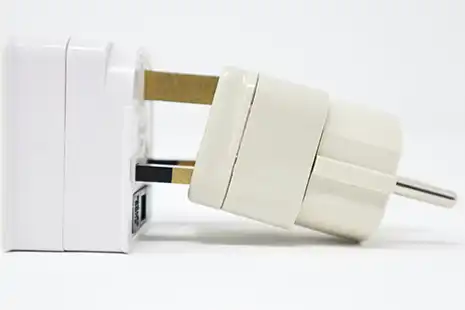
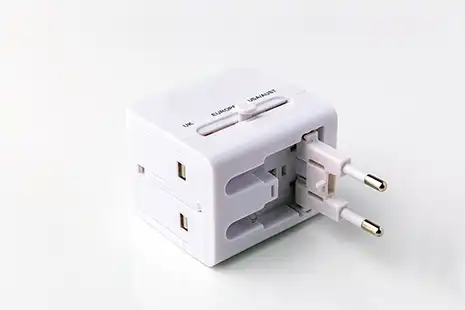
An adapter lets an American plug fit a Croatian socket. A converter changes the voltage. Nearly all converters are also adapters; not all adapters are converters. Croatia uses the same sockets as Bosnia and Herzegovina and most of Europe, so one European adapter covers the whole pilgrimage.
Check the label on each device. If it reads INPUT: 100–240V, 50/60 Hz, it is dual-voltage and needs only an adapter. That covers most phones, tablets, laptops, and cameras. Most CPAP machines are dual-voltage as well, but confirm with your manufacturer or physician.
Single-voltage devices need a converter, or the higher European voltage will destroy them. Hair dryers, straighteners, curling irons, and many electric shavers and toothbrushes fall into this category. Most coastal hotels provide hair dryers; your pilgrim packet confirms the specific hotels on your departure.
Questions Pilgrims Ask
Do U.S. citizens need a visa for Croatia?
No. U.S. citizens can enter Croatia without a visa for stays of up to 90 days in any 180-day period, which covers any Tekton pilgrimage. Your passport must have been issued within the last ten years and be valid for at least three months beyond the day you leave the Schengen Area. Since April 2026 the European Entry/Exit System replaces passport stamps with a fingerprint and photo taken at the border on your first entry.
What is ETIAS and does Croatia require it yet?
ETIAS is a pre-travel authorization the European Union plans to require of visa-exempt visitors, including Americans, comparable to the ESTA the United States requires of Europeans. It is expected to cost about 20 euros, cover all Schengen countries including Croatia, and last three years. As of this writing it is not yet in force and no applications are being accepted. Tekton will tell registered pilgrims when it becomes a requirement, and it does not apply to Bosnia and Herzegovina at all.
Which months have the best weather on the Croatian coast?
May, June, September, and October give the best walking weather in Split, Makarska, and Dubrovnik: warm days, cool evenings, and little rain. July and August are hot and crowded in the old towns, though perfectly manageable if you start early. November through February is the wet season on the Dalmatian coast, mild but grey. The Adriatic is warmest in September.
What happens at Split or Dubrovnik airport when I arrive?
Both are small, single-terminal airports, and arrival is quick. At passport control on your first entry to the Schengen Area you will have your fingerprints and photo taken under the Entry/Exit System, which takes a minute or two and replaces the old stamp. After baggage claim your Tekton representative meets the group and the coach departs for the coast or for Medjugorje. Plan on being at the airport two and a half to three hours before an international departure.
Are shops in Croatia closed on Sundays?
Most are. Since 2023 Croatian law closes retail shops on Sundays and public holidays, with a handful of exceptions such as bakeries, pharmacies, and shops in airports and some tourist areas. Cafes and restaurants stay open. If you want to buy something specific on the coast, do it on a weekday, and treat Sunday as the country does: Mass, a long coffee, and a walk by the sea.
What Catholic pilgrimage sites are in Croatia?
On the Dalmatian coast, the Cathedral of Saint Domnius in Split is among the oldest Catholic cathedrals still in use, the Church of Saint Blaise in Dubrovnik honors the city's patron, and the Shrine of Our Lady of Lourdes at Vepric near Makarska is a quiet grotto shrine. Inland, Marija Bistrica near Zagreb is Croatia's national Marian shrine, where Saint John Paul II beatified Blessed Aloysius Stepinac in 1998, and Our Lady of Trsat above Rijeka is the country's oldest Marian sanctuary. Sinj, near Split, keeps the miraculous image of Our Lady of Sinj.
Is the tap water in Croatia safe to drink?
Yes. Tap water is safe to drink throughout Croatia, including Split, Dubrovnik, and the islands, and public fountains in the old towns are fed from the same supply. Carry a refillable bottle; the coast is drier and sunnier than it looks, and you will walk more than you expect.
What plugs are used in Croatia, and do I need an adapter?
Croatia uses the round two-pin Type C and Type F sockets at 230 volts, the same as most of continental Europe and as Bosnia and Herzegovina. American plugs do not fit, so you need an adapter, and one European adapter covers your whole pilgrimage. Dual-voltage devices such as phones, tablets, laptops, and most CPAP machines need only the adapter. Hair dryers, curling irons, and some electric shavers are often single-voltage and would need a converter.
Next Steps
Everything Settled Before You Go
For thirty years Tekton has brought pilgrims down out of the hills of Herzegovina to this sea. Everything here is settled before you go, so nothing practical is left to arrange when you arrive.