

Parish Renewal Through Pilgrimage
Discover the parish pilgrimage benefits that renew a whole community—shared grace, deeper bonds, and parishioners who return changed, not just traveled.

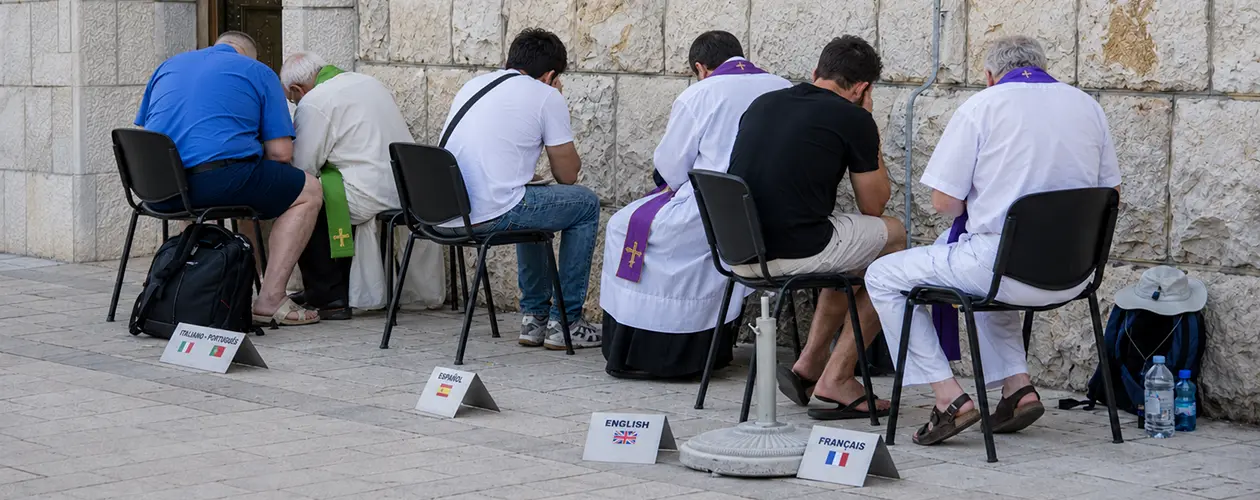
Ask a priest who has led his people on pilgrimage what changed, and he rarely begins with the sites. He begins with the parish. A dozen families who once knew one another only by sight now pray together on weekday mornings. A quiet parishioner has started a Scripture group. The whole community feels, somehow, more like a family. This is where the deepest parish pilgrimage benefits are found — not in the individual soul alone, but in the life of the community that goes and returns together, unable to be quite what it was before.
We work with clergy across the country who are weighing whether to take on a group pilgrimage, and the question beneath the logistical ones is almost always pastoral: will this actually bear fruit in my parish? It will — but only if it is approached as a pilgrimage and not as religious tourism. The difference is everything, and it is the difference that shapes whether your people come home with souvenirs or with seeds of grace.
Why Parish Pilgrimage Benefits Reach the Whole Community
The Catechism describes a parish as "a definite community of the Christian faithful," entrusted to a pastor "as its own shepherd" (CCC 2179). That word — community — is easy to say and hard to build. Ordinary parish life gives your people an hour together on Sunday, often facing the same direction, rarely speaking. A Catholic group pilgrimage gives them ten days shoulder to shoulder: praying, eating, walking, growing tired, and being surprised by grace in each other's company.
This is not a modern invention. The very first Christian community was formed in exactly this way. After Pentecost, the faithful "devoted themselves to the teaching of the apostles and to the communal life, to the breaking of the bread and to the prayers" (Acts 2:42). Shared devotion, shared meals, shared life — the Church was born communal. Pilgrimage recovers that pattern for a parish grown used to anonymity. When you consider the benefits of a parish pilgrimage, this is the foundation: you are not sending individuals on a spiritual errand, you are forming a community that will still be a community long after the luggage is unpacked.
A Shared Encounter, Not a Shared Itinerary
Here is where you, as shepherd, make the decisive difference. A tourist collects experiences; a pilgrim submits to being changed by them. A tourist wants the smooth, the comfortable, the photogenic; a pilgrim understands that we are homo viator, men and women on a journey, exiles walking toward a homeland we have not yet seen. Pilgrimage lets a parish act out that truth with its own feet.
Your task is to help your people cross from the first posture into the second — and to do it together. When you gather them beforehand to name their intentions, when you preach at the sites in a way that connects Nazareth or Assisi to their own kitchen tables, when you frame the long lines and the early mornings not as failures of planning but as offerings, you are teaching an entire community to receive the same graces at once. That shared interior movement is what a solitary journey can never produce. It is also what makes the community itself the fruit.
Relationships Forged on the Road
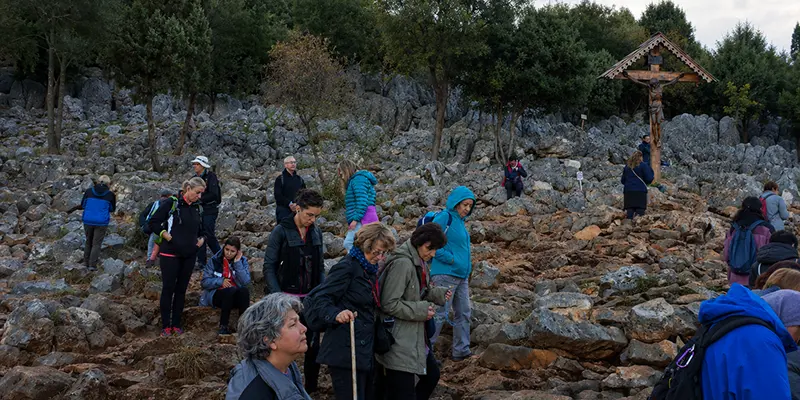
Something happens between the third and fourth day that no committee meeting can manufacture. The widow and the young father, seated near each other on the coach, discover they are carrying similar burdens. The reserved accountant weeps quietly at Calvary and lets someone see it. Meals stretch long. Rosaries are prayed aloud in one voice. Shared hardship — the heat, the crowds, the aching feet accepted as penance rather than grievance — does what comfort never can: it knits strangers into brothers and sisters.
SCRIPTURE“How good and how pleasant it is, when brothers dwell together as one!”PSALM 133:1
These bonds do not stay abroad. They come home and reshape the parish from within. Friendships born at Fatima become the core of a new prayer group. A couple who renewed their vows at Cana becomes the marriage witnesses others turn to. The community you sent out returns denser, warmer, more woven together — and that density is felt by everyone, including the many who never left.
The Ripple of Evangelization Back Home
The Magi found the Child, and then "they departed for their country by another way" (Matthew 2:12). They could not go home as they had come. Neither can a parish that has truly encountered Christ on pilgrimage. The measure of the journey is never the photographs; it is what changes when ordinary life resumes. Did the holy sites take root, or were they merely visited?
When they take root, the whole parish feels it. Returning pilgrims are your most credible evangelists — not because they were handed talking points, but because their neighbors can see that something is different. They speak about their faith at the school pickup and the parish supper with a freedom they did not have before. They invite. They testify, often without meaning to. One pilgrimage of thirty parishioners can quietly stir a hunger in three hundred who stayed behind and now wonder what their friends found. This is evangelization not as program but as overflow — the natural radiance of people who returned changed, not just traveled.
New Leaders and Stirred Vocations
Watch who steps forward on pilgrimage. The parishioner who organizes the airport meet-up, keeps track of the stragglers, or leads the evening Rosary is often revealing a capacity for service that parish life had never asked of them. Many priests come home with a short list of parishioners they now know are ready to lead — catechists, sacristans, hospitality coordinators, future councilmembers. Pilgrimage is a proving ground for lay leadership precisely because it strips away the familiar roles and lets people serve.
The deeper stirrings run toward vocation itself. A young man praying at the Sea of Galilee, or a teenager kneeling where a saint once knelt, may hear for the first time a call he cannot yet name. Marriages are rekindled. Reconciliations, long delayed, finally arrive in a confessional far from home. These are not marketing claims; they are the ordinary harvest of putting a community within reach of the sacraments at the places where grace has poured out for centuries — and they replenish the parish at its roots.
You Shepherd the Souls, We Carry the Rest
None of this fruit is automatic. It depends on the community arriving prepared — hearts opened before the plane leaves the ground, intentions packed alongside the passports. That interior groundwork is your work as shepherd, and it is the single greatest predictor of whether a pilgrimage transforms a parish or merely entertains it. We would simply ask you to guard the time for it: the formation evenings, the invitation to expect something, the framing of the whole journey as an encounter rather than an escape. Our companion reflection on preparing for a Catholic pilgrimage can help you set that tone with your people.
The rest — the flights, the hotels, the reservations at the shrines, the Mass times secured at the altars that matter most — is ours. We carry the logistics so that you are free to be what only you can be: the priest who preaches at the empty tomb, hears confessions in the Garden, and knows the name of every soul in his care. When the practical burden is lifted from your shoulders, the parish pilgrimage benefits you came for have room to grow.
Returning by a Different Way
A parish that goes on pilgrimage together does not simply add a memory to its calendar. It crosses a threshold. The community that comes home prays differently, serves differently, welcomes differently — because it has stood together in the places where our salvation was won and cannot unsee what it saw. The real pilgrimage, as your people will discover, begins the morning after they return, in the ordinary parish that now carries the holy places within it.
If you sense that your parish is ready to be renewed from the inside out, we would be honored to help you shepherd them there — and to carry everything else so you can keep your eyes on the souls entrusted to you.
Considering what a pilgrimage could mean for your parish? Explore where your community might go together — See All Upcoming Pilgrimages — or, if you are ready to gather your people, learn how we support clergy every step of the way when you Lead Your Own Group.
Know someone who is discerning a pilgrimage? Pass this along.