

Tekton Ministries
Publish Date: February 2, 2026
For many pilgrims, the moment they step into the baths at Lourdes marks the emotional and spiritual apex of their entire journey. It is one thing to visit the Grotto where Our Lady appeared to St. Bernadette. It is another thing entirely to immerse yourself in the very waters she revealed—to physically participate in the message of Lourdes with your whole body and soul.
If you are considering a pilgrimage to Lourdes, the baths are likely both the most anticipated and most mysterious part of your trip. What actually happens there? What should you expect? And how do you prepare your heart to receive whatever graces God wishes to give?
This guide will walk you through the experience so you can approach the healing waters not as a nervous tourist, but as a pilgrim ready for encounter.
The Story Behind the Spring
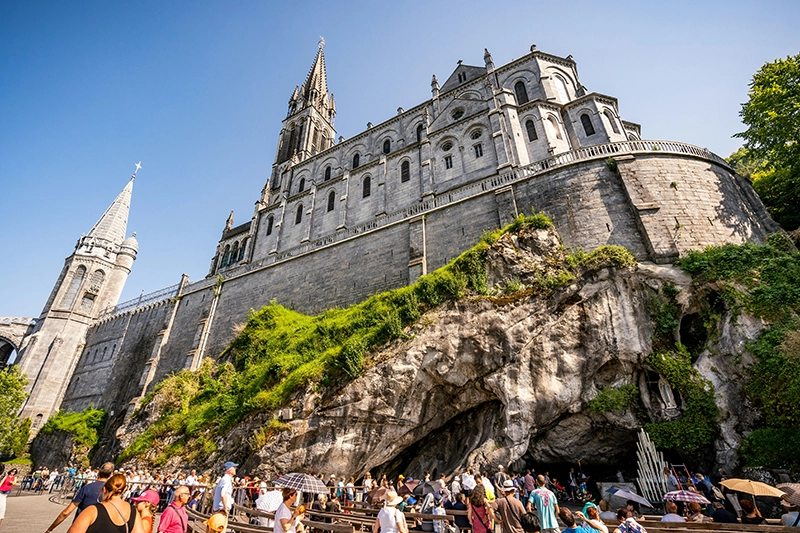
On February 25, 1858, during the ninth apparition at the Grotto of Massabielle, the Blessed Virgin Mary instructed the young Bernadette Soubirous to go and drink from the spring and wash herself there. There was no visible spring. Bernadette, confused but obedient, began to dig in the muddy ground at the back of the grotto. What emerged was a trickle of dirty water that soon ran clear—a spring that has flowed continuously ever since, producing over 27,000 gallons of water daily.
The baths were constructed in 1882 to allow pilgrims to follow Bernadette's example and perform what the Sanctuary calls "the water gesture." Today, hundreds of thousands of pilgrims participate in this ritual each year, seeking physical healing, spiritual renewal, or simply a deeper encounter with the Mother of God.
It is important to understand from the outset: the Church has never claimed that Lourdes water possesses magical properties. The water itself has been tested repeatedly and found to be ordinary spring water with no unusual mineral content. The healings that occur—70 of which have been officially recognized as miraculous by the Church after rigorous medical investigation—are attributed to God's grace, not to the chemical composition of the water. The bath is a sacramental gesture, an act of faith and humility that opens the pilgrim to receive whatever God wishes to give.
What to Expect: The Practical Experience
The baths are located within the Sanctuary of Our Lady of Lourdes, to the left of the Grotto when facing the rock. There are separate entrances for men and women, and the baths operate from Easter through the end of October, typically from 9:00 AM to 11:00 AM and 2:30 PM to 4:00 PM, though times may vary.
The first thing you will encounter is the line. Depending on the season and time of day, you may wait anywhere from thirty minutes to several hours. This waiting time is not wasted time—it is part of the pilgrimage. The Sanctuary encourages pilgrims to use these moments for prayer, reflection, and spiritual preparation. Many pilgrims pray the Rosary together while waiting, and this shared prayer creates a profound sense of communion with your fellow pilgrims from around the world.
As you approach the entrance to the baths, volunteers called hospitaliers will guide you through the process. These dedicated men and women serve without payment, offering their time as an act of devotion and service to Our Lady. They assist with everything from crowd management to helping sick and disabled pilgrims navigate the experience with dignity.
Inside, you will be directed to a small changing area where you will remove your clothing. The hospitaliers will provide you with a simple blue cape to wrap around yourself for modesty. You will then be led to one of the individual bath chambers—stone basins filled with the spring water from the Grotto.
The water is cold. This is perhaps the detail that makes pilgrims most nervous, and there is no way to sugarcoat it—the water comes directly from the underground spring and maintains a temperature of around 54°F (12°C) year-round. But countless pilgrims report that after the initial shock, they felt an unexpected warmth or peace. The physical sensation of the cold becomes secondary to the spiritual reality of the moment.
With the assistance of the hospitaliers, you will be helped to sit or recline briefly in the water while they pray over you, typically invoking the intercession of Our Lady of Lourdes and St. Bernadette. The immersion lasts only a few seconds. You will then be helped to stand, wrapped again in your cape, and guided back to the changing area. You will notice that despite being fully immersed, you dry almost immediately—a small but curious phenomenon that many pilgrims remark upon.
The entire experience inside the baths takes only a few minutes. But the interior work it accomplishes can last a lifetime.
Preparing Your Heart: Pilgrim or Tourist?
The difference between a tourist and a pilgrim is never more evident than at the Lourdes baths. A tourist approaches the experience hoping to check it off a list, perhaps secretly hoping for a dramatic miracle while simultaneously maintaining enough skepticism to protect against disappointment. A pilgrim approaches with open hands, prepared to receive whatever God chooses to give—whether that is physical healing, interior peace, deeper faith, or simply the grace to accept suffering with greater love.
Remember that the wise men who visited the Christ Child "returned to their country by a different way." The goal of pilgrimage is not to collect experiences but to be transformed. If you return from the Lourdes baths the same person you were before—with the same attachments, the same fears, the same spiritual lukewarmness—you were merely a tourist who got wet.
Before you even arrive at Lourdes, take time to prepare specific intentions for your bath experience. Write them down. Be concrete: not just "pray for my health," but "ask Our Lady to help me accept my diagnosis with peace" or "beg for the conversion of my brother who has left the Church." The clarity of your intentions will focus your heart and make the experience far more spiritually fruitful.
While you wait in line, resist the temptation to scroll through your phone or chat idly. This is sacred time. Pray the Rosary. Read the accounts of the apparitions. Meditate on the words Our Lady spoke to Bernadette: "I do not promise to make you happy in this world, but in the next." Let these words sink into your heart as you prepare to immerse yourself in the same spring that Bernadette uncovered with her own hands.
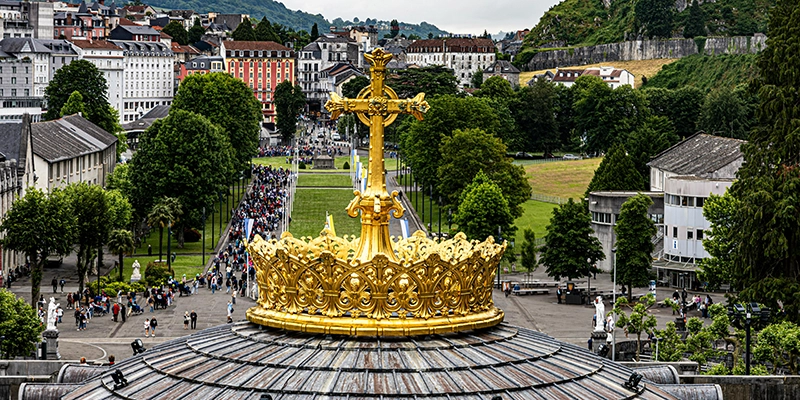
Photo by Regan Dsouza on Pexels.
What Healing Really Means
Many pilgrims come to Lourdes seeking physical healing, and the Church affirms that genuine miraculous cures have occurred there. The Lourdes Medical Bureau, established in 1883, rigorously investigates reported healings using strict scientific criteria. For a cure to be officially recognized as miraculous, it must be instantaneous, complete, lasting, and inexplicable by any known medical science.
But here is the deeper truth that every pilgrim must understand: the vast majority of people who bathe in the Lourdes waters are not physically healed of their ailments. The seventy officially recognized miracles represent a tiny fraction of the millions who have made the journey. If you approach the baths expecting a dramatic physical cure, you may leave disappointed—and you will have missed the point entirely.
The real miracle of Lourdes is interior. It is the sick person who leaves with a profound peace about their illness. It is the grieving parent who finds the strength to surrender their child to God's will. It is the lukewarm Catholic who rediscovers the fire of faith they thought had been extinguished forever. These healings cannot be measured by the Medical Bureau, but they are no less real—and they are far more common.
As you enter the waters, pray not only for what you want, but for the grace to want what God wants. Surrender your expectations. Let go of your demands. Open yourself to the possibility that the healing you need most desperately may not be the healing you came seeking.
After the Baths: Continuing the Pilgrimage
The experience of the baths is not meant to be an isolated spiritual peak followed by a return to normal life. It is one movement in the larger symphony of your Lourdes pilgrimage—and your entire spiritual life.
After your bath, spend time in quiet prayer at the Grotto itself. Touch the rock that Bernadette touched. Light a candle and let your intentions rise with the flame. Attend one of the daily Masses offered at the Sanctuary. Participate in the evening torchlight procession, joining thousands of pilgrims in singing the Lourdes Hymn and processing through the Sanctuary grounds by candlelight.
Fill a container with water from the taps near the Grotto to take home. This water can be used to bless yourself, your family, and your home. Many pilgrims give small bottles of Lourdes water to sick friends and family members as a reminder that they have been prayed for in this holy place.
Most importantly, carry the spirit of Lourdes back into your daily life. The real pilgrimage begins when you walk through your own front door. Did the bath experience move you to greater prayer? Then commit to a daily Rosary. Did it awaken compassion for the sick? Then volunteer at your local hospital or nursing home. Did it remind you of your own mortality and dependence on God? Then go to Confession and receive the Eucharist with renewed devotion.
The waters of Lourdes are not magic. They are an invitation—an invitation to trust, to surrender, to open yourself to the transforming power of grace. Accept that invitation, and you will return home by a different way.
Practical Tips for Your Visit
Plan your timing. The baths are busiest during major pilgrimage seasons and on Marian feast days. If possible, arrive early in the morning when lines are shortest. The wait itself is valuable, but a shorter wait may be helpful if you have mobility limitations or are traveling with children.
Dress simply. You will be removing your clothing for the bath, so wear something easy to take off and put back on. Many pilgrims wear swimwear underneath their clothes, though this is not required.
Bring your prayer intentions. Written intentions help focus your prayer during the wait and during the immersion itself. You may also carry prayer requests from friends and family who could not make the journey.
Accept assistance gracefully. The hospitaliers are there to help. Allow them to guide you through the process, especially if you have any physical limitations. Their service is an act of love.
Embrace the cold. The temperature of the water is part of the experience. Offer the momentary discomfort as a small sacrifice united to your intentions.
Stay present. This is not the moment for photos or souvenirs. Leave your phone and camera behind. Be fully present to the grace of the moment.
Ready to experience the healing waters of Lourdes? A pilgrimage with Tekton Ministries provides the spiritual framework and expert guidance to help you encounter Christ through Mary—not just visit where she appeared. See All Upcoming Pilgrimages to explore available dates, or learn more about how to Lead Your Own Group pilgrimage.