


Tekton Ministries
Publish Date: February 12, 2026
The Magi did not stumble into Bethlehem. They studied the signs, assembled their gifts, and set out with intention. Their preparation shaped everything that followed—the journey itself became an act of worship because they had already begun the interior work before they ever left home. The same principle holds for every pilgrimage you will ever lead: the spiritual fruit your parishioners receive depends enormously on the formation they receive before departure.
Without preparation, even the holiest sites become checkboxes. Pilgrims snap photos at the Holy Sepulchre, glance at the grotto in Bethlehem, and return home with souvenirs but not transformation. With preparation, those same pilgrims arrive with hearts already open, intentions already formed, and a framework for receiving the graces God wants to pour out at every stop along the way.
This guide walks you through how to design and lead pilgrimage formation sessions that turn a parish trip into a true encounter with Christ—one your people will carry with them long after they return home.
Why Formation Changes Everything
Most travel companies send their clients a packing list and a daily itinerary. That is useful information, but it does nothing to prepare the soul. As the priest leading this pilgrimage, you have something no travel document can offer: the ability to prepare your parishioners for pilgrimage at the deepest level, forming them spiritually so they arrive not as tourists but as pilgrims.
The difference is not subtle. A tourist consumes experiences. A pilgrim receives graces. A tourist is disappointed when the bus is late or the weather is poor. A pilgrim understands that discomfort is part of the offering—that the aching feet and the crowded shrine are themselves a kind of penance, a small share in the hardship that every journey toward God requires.
Formation sessions are where this shift in posture begins. When you gather your registered pilgrims in the weeks before departure—to pray together, study Scripture, and set their intentions—you are doing something profoundly pastoral. You are tilling the soil so that the seeds of grace planted at each holy site find ground ready to receive them.
Structuring Your Formation Program
A strong formation program doesn't need to be elaborate. Four to six sessions over the two months before departure is ideal—enough to build momentum and community without overwhelming busy schedules. Gather in the parish hall, a meeting room, or even the church itself. The setting matters less than the consistency.
Each session should blend three elements: prayer, study, and practical preparation. Open with a brief prayer or Scripture reading connected to the pilgrimage. Spend the core of the session on formation content. Close with time for questions, conversation, and a shared intention. Sixty to ninety minutes is the right length—enough to go deep, short enough to respect everyone's time.
Here is a framework that has served parish pilgrimage groups well, adaptable to any destination:
Session One — The Heart of Pilgrimage: Begin with the most important session of all: why pilgrimage is different from travel. This is where you introduce the pilgrim mindset. Talk about what it means to journey toward God rather than simply visiting a place. Invite each participant to begin identifying the intentions they want to carry—the prayers, the struggles, the thanksgivings they will lay before the Lord at each sacred site. Encourage them to write these down and bring them to every subsequent gathering.
Session Two — Scripture and the Sites: Walk through the key biblical passages connected to the places you will visit. If you are traveling to the Holy Land, read the Sermon on the Mount before visiting the Mount of Beatitudes. If Rome, study Acts and Paul's letters from captivity. If Lourdes or Fatima, immerse your group in the Magnificat and the Marian passages. The goal is that no pilgrim arrives at a site without already having encountered it in prayer and Scripture.
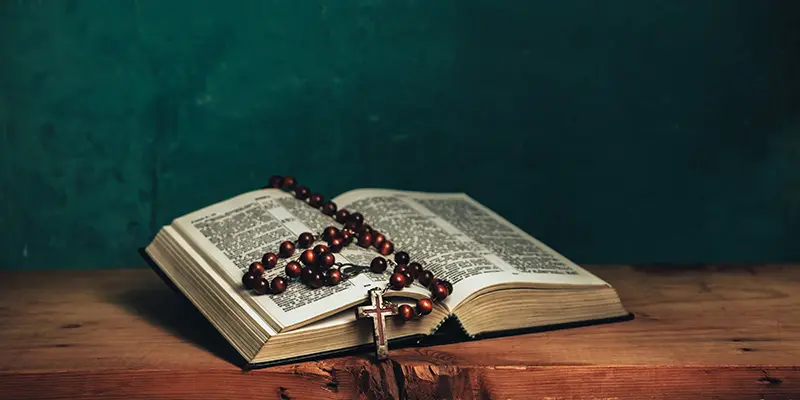
Pilgrimage formation begins with Scripture—walking through the key Gospel passages before walking the land itself.
Session Three — History and Context: Pilgrims are often disoriented when modern reality doesn't match their mental images. A basic introduction to the historical and cultural context of your destination prevents confusion and deepens understanding. For the Holy Land, this means Second Temple Judaism, Roman occupation, and the complex mosaic of Christian communities that have kept the faith alive there for two millennia. For European shrines, it means the history of the apparition or the saint, and the living devotional culture that surrounds the site today.
Session Four — Practical Preparation and the Pilgrim's Disposition: This is where you address the physical realities honestly—the walking, the early mornings, the crowds at sacred sites—but frame them within the pilgrim's disposition. Long lines are not inconveniences; they are opportunities for patience and prayer. Exhaustion is not a failure of planning; it is a small sacrifice offered alongside the pilgrimage itself. Help your parishioners understand that embracing discomfort rather than resenting it will open them to graces they would otherwise miss.
Sessions Five and Six (Optional): Depending on the complexity of your pilgrimage and the hunger of your group, you may add sessions on the sacramental opportunities available during the trip, deeper dives into specific sites, or time for pilgrims to share their intentions with one another. These later sessions often become the most meaningful, as the group begins to coalesce into a genuine community of faith before they ever board the plane.
Building Community Before the Journey
One of the most underappreciated benefits of pilgrimage formation sessions is what they do for group cohesion. A pilgrimage group that meets for the first time at the airport is a collection of individuals. A group that has prayed together, studied together, and shared their intentions over several weeks is already a community—and that community becomes the vessel through which God works throughout the trip.
When pilgrims know one another's stories and prayer intentions before departure, something remarkable happens on the road. They notice when someone is struggling. They pray for one another at the holy sites. They share moments of grace with people who understand why those moments matter. The bonds formed during pilgrimage formation sessions frequently become some of the deepest friendships in the parish—relationships rooted not in social affinity but in shared encounter with the Lord.
When pilgrims share their intentions before departure, the journey becomes a shared act of prayer—each person carrying the others before the Lord.
The Priest's Role in Formation
You do not need to be a biblical scholar or a seasoned pilgrim to lead these sessions effectively. What you need is what you already possess: a pastoral heart, a love of Scripture, and knowledge of your people. You know the widow who is quietly carrying her grief to the Holy Sepulchre. You know the young couple hoping their marriage will be strengthened at Cana. You know the retired teacher who has dreamed of this trip for thirty years. That knowledge is irreplaceable, and it allows you to shape the formation in ways no generic program ever could.
If you have traveled to the destination before, share your own experience—not as a travelogue, but as a witness. Tell your people about the moment at the Sea of Galilee when the Gospel suddenly became three-dimensional for you, or the unexpected grace you received at Lourdes. Your vulnerability invites theirs, and that mutual openness is exactly the disposition pilgrims need.
If this is your first time leading a pilgrimage, say so honestly. Your parishioners will not think less of you. They will appreciate your willingness to journey alongside them, learning and receiving together. Your pilgrimage company can provide destination-specific resources to supplement your sessions, and many experienced pilgrimage coordinators are happy to offer guidance on formation content.
Sending Your Pilgrims Forth
Consider closing your final formation session with a brief sending rite—a blessing of the pilgrims, perhaps during a weekday Mass or a dedicated holy hour. This liturgical sending reinforces what your formation program has been building: the understanding that this journey is not a vacation but a sacred act, undertaken in the name of the Church and with the prayers of the parish behind them.
Invite the broader parish to pray for the pilgrims during their absence. Include them in the general intercessions. This simple act widens the circle of grace—the pilgrims carry the parish with them, and the parish shares in the fruits the pilgrims bring home.
The Magi returned to their country by a different way. That transformation did not begin when they found the Christ Child—it began when they first looked up at the star and decided to follow it. Your formation sessions are the moment your parishioners look up. Everything that follows—the sites, the sacraments, the graces of the journey itself—will be shaped by the preparation that began in your parish hall, weeks before the pilgrimage ever started.
Ready to start planning your parish pilgrimage? We provide dedicated support for priests at every stage—from formation resources to on-the-ground logistics. See All Upcoming Pilgrimages to explore available dates, or learn more about how to Lead Your Own Group with our dedicated support for clergy.