

Tekton Ministries
Publish Date: February 4, 2026
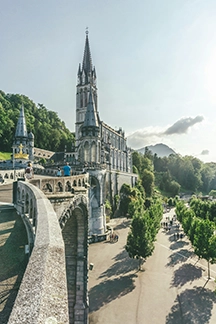
Photo by Jose Maria Sava / Unsplash.
Of all the Marian shrines in the world, Lourdes holds a singular place in the Catholic imagination. Here, at the foot of the Pyrenees, Our Lady appeared to a poor, asthmatic girl named Bernadette Soubirous and revealed herself as the Immaculate Conception—confirming in a muddy grotto what Pope Pius IX had proclaimed as dogma just four years earlier. If you have felt drawn to lead your parish to Lourdes, you are responding to a call that countless priests before you have answered.
But leading a pilgrimage to Lourdes is not the same as visiting on your own. As the spiritual shepherd of your group, you will celebrate the sacraments in sacred spaces, accompany souls who may be carrying burdens of illness or grief, and help your parishioners encounter Mary's maternal intercession in one of the Church's most beloved sanctuaries. Your role is to help them become true pilgrims—not tourists collecting photos, but souls seeking seeds of grace.
Why Lourdes? The Unique Character of This Shrine
Lourdes speaks with particular tenderness to the sick, the suffering, and the spiritually weary. Each year, approximately six million pilgrims travel to this small French town, many seeking healing of body or soul. The presence of the malades—the sick pilgrims who are honored guests at every liturgy and procession—shapes the entire atmosphere of the sanctuary. Here, suffering is not hidden but honored. The vulnerable are not pushed to the margins but placed at the very center of the Church's prayer.
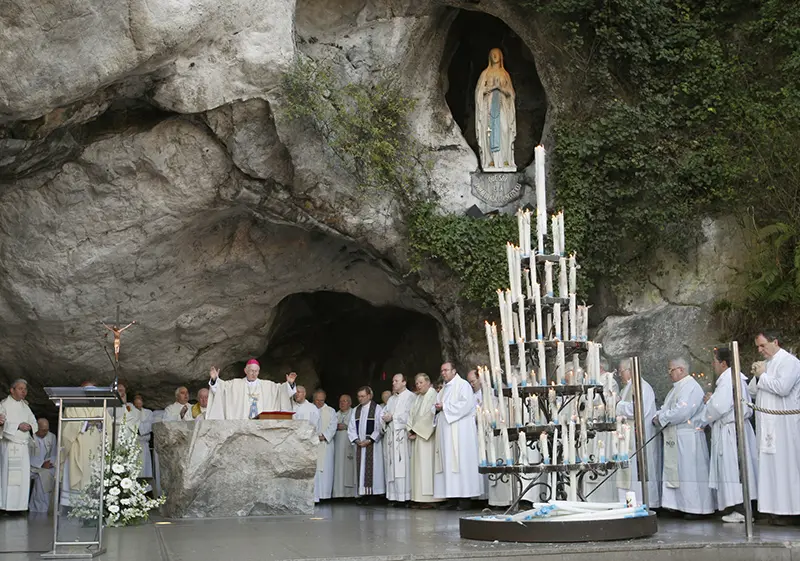
The grotto at Massabielle remains remarkably simple: a plain stone altar, the spring Bernadette uncovered, and above it Fabisch's statue of Our Lady in the niche where she appeared. God chose to reveal His Mother not in a grand cathedral but in what was essentially a garbage dump outside town—a place so unpleasant the locals avoided it. As a priest leading your parish to Lourdes, you have the privilege of helping your people encounter this mystery: that God meets us in our poverty and transforms it into holy ground.
For your parishioners, Lourdes offers something rare: a place where the Blessed Mother's maternal intercession feels almost tangible, where the Church's care for the suffering becomes visible, and where pilgrims often return home changed in ways they struggle to articulate. The goal is not simply to visit Lourdes but to encounter Christ through His Mother—and by that encounter, to return home by a different way.
Preparing Your Pilgrims Before Departure
The richest pilgrimages begin long before the plane takes off. A pilgrimage is only as fruitful as the spiritual groundwork laid before departure. Consider gathering your registered pilgrims for formation sessions in the months before you leave. This preparation shapes their interior disposition and helps them arrive ready to receive what Lourdes offers.
The Story of Bernadette: Walk your pilgrims through the eighteen apparitions that occurred between February and July of 1858. Help them understand who Bernadette was—an impoverished, uneducated girl whose family had fallen so low they were living in an abandoned prison cell called the Cachot. When they stand at the grotto, knowing this context transforms the experience. Mary chose the least likely messenger, and Bernadette's faithfulness in the face of skepticism, interrogation, and even her parents' initial opposition remains a powerful witness.
The Message of Lourdes: Our Lady's words to Bernadette were few but rich: "I do not promise to make you happy in this world, but in the next." She asked for prayer, penance, and processions. She directed Bernadette to scrape the earth and drink from a spring that did not yet exist—an act of humble obedience that revealed the miraculous waters. Help your pilgrims understand that Lourdes is not primarily about physical healing, though that sometimes occurs. It is about encountering God's love in the midst of suffering and finding the grace to carry our crosses with hope.
The Immaculate Conception: When Bernadette finally asked the Lady her name, she received an answer in the local dialect: "Que soy era Immaculada Concepciòu"—"I am the Immaculate Conception." Bernadette, who had never heard this term, ran to tell Father Peyramale, the parish priest, repeating the phrase over and over so she would not forget it. He recognized immediately what she could not have known: this was confirmation of the dogma Pius IX had proclaimed in 1854. A brief catechesis on what the Immaculate Conception means—and why it matters that Mary revealed this title at Lourdes—will deepen your pilgrims' appreciation of this shrine.
Interior Preparation: Encourage each pilgrim to identify specific intentions they are carrying. Who are they praying for? What healing—physical, emotional, spiritual, relational—are they seeking? Lourdes is a place of intercession. Pilgrims who arrive knowing what they want to lay before Our Lady will engage the experience more deeply. This intentionality is what separates the pilgrim from the tourist—the difference between returning with souvenirs and returning with seeds of grace.
Understanding the Sanctuary
The Sanctuary of Our Lady of Lourdes covers over 125 acres and includes multiple churches, chapels, and devotional spaces. Familiarizing yourself with the layout and significance of each area will help you lead your pilgrims effectively.
The Grotto of Massabielle: This is the heart of Lourdes—the exact spot where Our Lady appeared to Bernadette. The recess remains undecorated except for a plain stone altar and lectern for Mass. Above the main cavity is the niche where the apparitions occurred, now home to Fabisch's iconic statue. A large candelabra burns continuously beside the altar. During pilgrimage season, two Masses are typically celebrated at the grotto each morning. When Mass is not being celebrated, pilgrims process through the grotto, touching the rock that has been polished smooth by millions of hands. The spring Bernadette uncovered is visible at the rear, now shielded by glass.
The Three Basilicas: Rising above the grotto is the Basilica of the Immaculate Conception, often called the Upper Basilica—the chapel Our Lady requested when she told Bernadette to "go and tell the priests to build a chapel here." Consecrated in 1876, its Gothic spire reaches over 200 feet high, and its stained glass windows tell the story of the apparitions. Below it sits the Basilica of Our Lady of the Rosary, completed in 1899, recognizable by its Romano-Byzantine style and the two curved ramps that embrace the esplanade. Inside, over 20,000 square feet of mosaics depict the mysteries of the Rosary. The third and largest is the Basilica of St. Pius X, consecrated in 1958 for the centenary of the apparitions. This vast underground church can accommodate twenty-five thousand people and hosts the daily Eucharistic procession and Blessing of the Sick.
The Baths: Located along the Massabielle rock near the grotto, the baths allow pilgrims to immerse themselves in the spring water as a gesture of faith. This echoes Bernadette's own actions during the apparitions when Our Lady instructed her to wash in the spring. Volunteers assist pilgrims, and the experience—though brief—is often profoundly moving.
The Fountains and Chapels of Light: Pilgrims can collect water from taps near the grotto to drink or take home. Across the river, the Chapels of Light provide space for lighting votive candles—a gesture Bernadette herself made during the apparitions. Around 800 tons of candle wax burn annually at Lourdes, representing millions of prayer intentions.
Celebrating the Sacraments at Lourdes
As the priest leading your pilgrimage, the sacraments you celebrate will be among the most memorable moments for your parishioners. Lourdes offers extraordinary settings for liturgy, but securing Mass times requires advance coordination.
Reserving Mass Times: Group Mass reservations at Lourdes are handled through the Sanctuary's pilgrimage office. Work with us well in advance to register your group and request specific Mass times and locations. The grotto Masses are especially coveted—celebrating the Eucharist at the very spot where Our Lady appeared creates an unforgettable experience. Other options include the Crypt, various side chapels, and for larger groups, the Basilica of St. Pius X.
Preparing Your Homilies: The setting at Lourdes does much of the preaching for you, but thoughtful homilies that connect the Gospel to this specific place will deepen your pilgrims' experience. Consider preparing reflections on Mary's fiat, on suffering and redemption, on the Eucharist as source and summit of the Christian life. Bernadette herself, when asked whether she was happier at her First Communion or during the apparitions, replied that "the two go together. They cannot be compared." Help your pilgrims see how Mary always leads us to her Son.
Confession: Lourdes stirs deep movements of conversion. The Reconciliation Chapel offers confessions daily, and pilgrims often experience a profound desire for the sacrament. Make yourself generously available throughout the trip. The grotto area, with its atmosphere of mercy and maternal love, creates a natural disposition for examining one's conscience and seeking reconciliation.
Anointing of the Sick: If any of your pilgrims are elderly or dealing with illness, Lourdes is a particularly meaningful place to offer this sacrament. The entire sanctuary honors the sick; here, those who suffer are not marginalized but placed at the center of the Church's prayer. Consider offering a communal Anointing of the Sick as part of your pilgrimage itinerary.
The Daily Processions
Two daily processions define the rhythm of pilgrimage at Lourdes, and participating in them together as a parish group creates powerful shared memories.
The Eucharistic Procession and Blessing of the Sick: Each afternoon at 5:00 PM during pilgrimage season, the Blessed Sacrament processes from the outdoor altar across the river, past the Crowned Virgin statue, and into the Basilica of St. Pius X. The sick and disabled lead the procession, followed by a priest, bishop, or cardinal carrying the monstrance. Doctors from the various pilgrimages walk behind the Blessed Sacrament. The procession concludes with Eucharistic adoration and the Blessing of the Sick—one of the most moving experiences available at Lourdes. Many of the documented healings have occurred during this blessing.
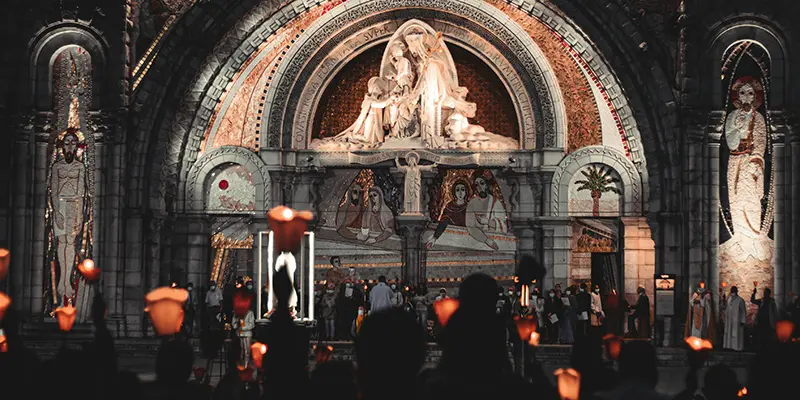
The Torchlight Marian Procession: Beginning at 9:00 PM, pilgrims gather near the grotto carrying candles and process through the sanctuary while praying the Rosary and singing the Lourdes hymn, "Immaculate Mary," in multiple languages. The procession ends in Rosary Square. Standing among thousands of flickering candles, hearing the Ave Maria sung in a dozen languages, your pilgrims will experience the universality of the Church in a visceral way. This procession often becomes the most emotionally significant moment of the pilgrimage.
Pastoral Care During the Pilgrimage
Leading a pilgrimage to Lourdes is one of the most intensive pastoral experiences you may ever have. For several days, you are constantly present to your people in a way that parish life rarely permits.
Accompanying the Suffering: Lourdes attracts pilgrims carrying heavy burdens—chronic illness, recent diagnoses, grief, family struggles, spiritual darkness. The atmosphere of the sanctuary often brings these burdens to the surface. Be prepared to listen, to pray with individuals, and to offer the sacraments. Some pilgrims will experience profound consolation; others may struggle with disappointment if they hoped for physical healing that does not come. Help them understand that the deepest healing Lourdes offers is the grace to unite our sufferings with Christ's.
Embracing the Difficulties: The combination of sacred space, intense prayer, physical fatigue, and close quarters can produce unexpected challenges. Pilgrims may feel overwhelmed by the crowds, frustrated by logistical hiccups, or experience spiritual dryness when they expected consolation. Help your people understand that these difficulties are not obstacles to grace but part of the offering itself. The pilgrim, unlike the tourist, embraces the mess—knowing that exhaustion, delays, and discomfort can become pathways to deeper surrender.
Caring for Yourself: The demands of pilgrimage leadership can be exhausting. Build in moments of personal prayer and rest. You cannot pour out what you do not have. Even brief periods of silence at the grotto, when you are not "on duty" for your group, will help you sustain the spiritual energy needed to shepherd your flock well.
After the Pilgrimage: Sustaining the Graces
The graces of Lourdes are meant to bear fruit long after your pilgrims return home. In many ways, the real pilgrimage begins the moment they walk through their own front doors. Plan for this continuation from the beginning.
Reunion Gathering: Schedule a gathering four to six weeks after your return. Invite pilgrims to share how the pilgrimage has continued to work in their hearts, what they have noticed since coming home, and how their prayer lives have changed. Often the deeper fruits of pilgrimage emerge only with time and reflection. The true work of the pilgrim is to make the ordinary holy by applying the extraordinary graces received abroad.
Marian Devotion in the Parish: Use the pilgrimage as a springboard for renewed Marian devotion in your parish—perhaps a regular Rosary group, increased attention to Marian feast days, or a parish consecration to Our Lady. Your pilgrims can become evangelists for devotion to Mary among those who could not travel.
A Final Word of Encouragement
Our Lady's message at Lourdes was simple: prayer, penance, and procession to a chapel built in her honor. For over 165 years, the faithful have responded. When you lead your parish to Lourdes, you join a great stream of pilgrims stretching back to those first curious crowds who followed young Bernadette to the grotto.
The work of preparation is significant. The days of pilgrimage will be demanding. But the graces your parishioners will receive—and the graces you yourself will receive as their shepherd—are beyond calculation. The elderly woman who touches the rock and weeps for the first time in years. The young father who finally understands what it means to trust God with his family. The parishioner battling cancer who discovers peace she did not know was possible. These are the fruits that await you at Lourdes.
Our Lady is waiting at the grotto. Your people are ready to encounter her. And you are the priest called to lead them there—and to help them return home by a different way.
Ready to begin planning your parish pilgrimage to Lourdes? We would be honored to help you create a meaningful experience for your community at this beloved Marian shrine. See All Upcoming Pilgrimages to explore available dates, or learn more about how to Lead Your Own Group with our dedicated support for clergy.